

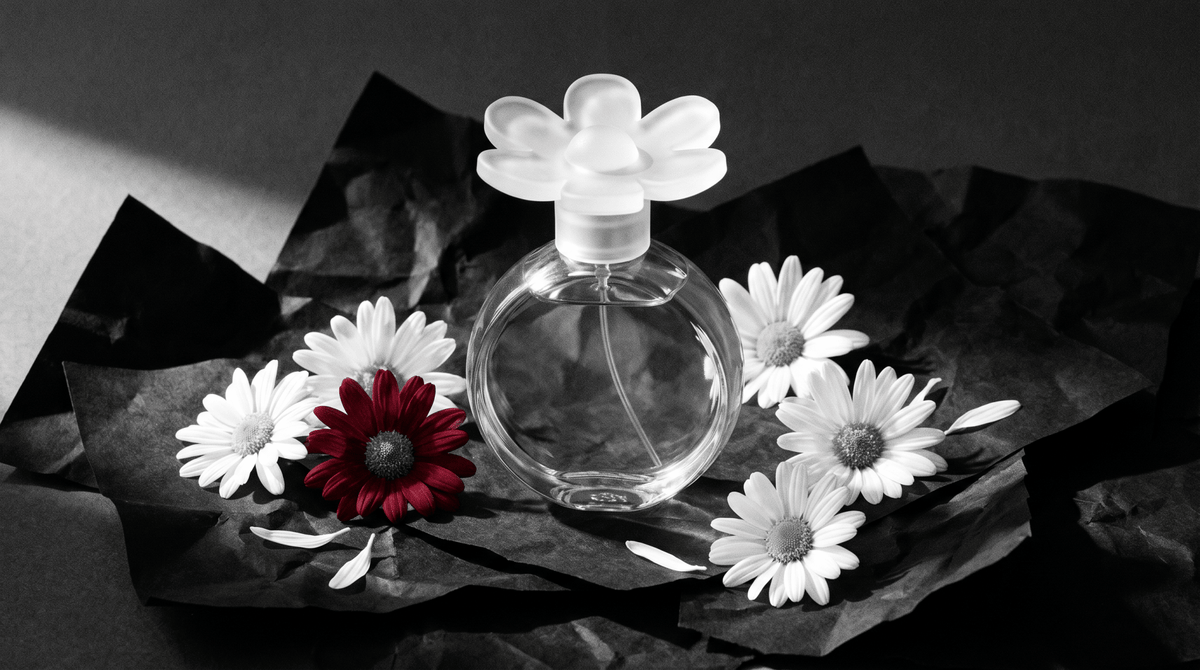
You’re probably standing at a familiar crossroads. One wrist smells bright and pretty from a quick department store spray. The paper blotter in your hand smells sweeter, softer, maybe a little cleaner. You know the name Marc Jacobs, you’ve seen the playful bottles, and now you’re trying to answer the practical questions most perfume counters don’t help with. Which one suits you, how long will it last, and is it worth buying a full bottle?
That’s where perfume marc jacobs gets interesting. This house is easy to approach, but it isn’t one-note. Some scents feel breezy and flirtatious. Others feel polished, creamy, woody, or evening-ready. And once you move past bottle design and note lists, performance matters just as much as first impression.
Table of Contents
- The Whimsical World of Marc Jacobs Fragrance
- Exploring the Iconic Daisy Collection
- Discovering Perfect, Decadence, and Other Favorites
- How to Choose Your Signature Marc Jacobs Scent
- Decoding Concentration, Longevity, and Sillage
- A Smart Shopper's Guide to Marc Jacobs Perfume
- Frequently Asked Questions
The Whimsical World of Marc Jacobs Fragrance
At the counter, Marc Jacobs usually stands out before you even spray anything. The bottles smile at you. The styling feels charming instead of severe. That visual playfulness matters because it reflects the scent style too. These perfumes tend to feel polished without becoming intimidating.

Marc Jacobs built that identity over time. He launched his fashion label in the 1980s and opened his first store in 1997. By 2013, the brand had expanded to over 200 retail stores across 80 countries, according to this Marc Jacobs brand overview. That scale helps explain why the fragrance side feels so visible and so accessible across different markets.
What the brand aesthetic smells like
If you’re new to perfume marc jacobs, think in moods rather than technical jargon:
- Playful means the scents often open with an inviting, easy smile rather than a stern, formal edge.
- Chic means even the sweeter or fruitier releases usually keep a clean finish.
- Approachable luxury means you can wear many of them casually without feeling overdressed.
That combination makes Marc Jacobs an easy entry point for people who want something designer, stylish, and easy to enjoy. It also keeps longtime fragrance lovers interested because the brand knows how to package joy without making it feel childish.
Marc Jacobs perfumes often work best for people who want personality without heaviness.
Why so many people start here
A lot of fragrance houses ask you to learn their language first. Marc Jacobs does the opposite. It offers a clear emotional read from the first spray. You don’t need to decode a complicated structure to know whether something feels sunny, soft, creamy, or glamorous.
That’s also why the line does well for gifting and for signature scent hunting. The brand rarely pushes you toward austere, difficult compositions. Instead, it gives you perfumes that are easy to wear but still distinct enough to remember.
Here’s the simplest way to think about the house:
| Style lane | What it tends to feel like | Best for |
|---|---|---|
| Bright floral | airy, fresh, optimistic | daytime, spring, easy office wear |
| Soft modern comfort | smooth, musky, rounded | daily wear, close encounters, all-season use |
| Richer glamour | deeper, dressier, more dramatic | evenings, events, cooler weather |
If you’ve ever felt overwhelmed by a crowded fragrance floor, this brand can feel like a relief. It knows how to be cheerful and stylish at the same time.
Exploring the Iconic Daisy Collection
If Marc Jacobs has a signature language in fragrance, Daisy is it. This is the family that many shoppers meet first, remember longest, and come back to when they want something easy to wear but still recognizably feminine and polished.

The original Daisy launched in 2007, and it became the brand’s best-selling perfume line. It was named after Daisy Buchanan from The Great Gatsby, a detail noted in the Marc Jacobs fragrance history on Wikipedia. That literary reference fits the line well. Daisy has always felt a little romantic, a little bright, and very easy to picture.
Why Daisy became the face of the brand
The original Daisy landed in a sweet spot many designer perfumes chase but don’t always hit. It feels youthful without being naïve. It feels pretty without becoming powdery in an old-fashioned way. It’s one of those scents that reads “put together” quickly.
For many wearers, Daisy is the perfume you reach for when you want something cheerful that won’t dominate the room. It suits brunch, office days, spring afternoons, and the sort of daily wear where you want compliments but not confusion.
A useful way to read the Daisy family is to ask one question: how airy, fruity, or sweet do you want your floral to be?
How the main Daisy styles differ
Here’s a practical map of the most recognizable branches of the line:
| Fragrance | Personality | Best fit |
|---|---|---|
| Daisy | fresh floral with a classic optimistic feel | everyday wear, gifts, first designer perfume |
| Daisy Eau So Fresh | brighter, juicier, more sparkling | daytime, warm weather, casual outfits |
| Daisy Dream | lighter, airier, more delicate | soft aesthetic, relaxed weekends, lighter touch |
| Daisy Love | sweeter and more cuddly | playful moods, easy date scent, comfort wear |
Daisy Eau So Fresh usually appeals to someone who likes the Daisy idea but wants more fizz and motion. It feels like the friend who’s always early to lunch, always wearing something effortless, and somehow never looks overdone.
Daisy Dream goes in a more floaty direction. If the original Daisy is bright daylight, Dream is soft light through a window. It’s useful for people who find some florals too assertive and want a more featherweight feel.
Later in the range, Daisy Love pushes into a sweeter, fluffier mood. This is often the one for someone who wants a friendlier, more comforting effect rather than a crisp green floral impression.
A quick visual can help if you’re comparing bottles and flankers in real time.
How to test Daisy without getting lost
At a store counter, don’t try to judge four Daisy perfumes in the first minute. They can seem similar at the top, then split apart as they settle. Use this sequence instead:
- Start with original Daisy so you understand the family’s center of gravity.
- Try one airier flanker such as Dream if you prefer subtlety.
- Try one sweeter flanker such as Love if you enjoy a softer, dessert-like mood.
- Leave the store and smell again later because the drydown often tells you more than the opening.
Practical rule: If you like the idea of floral perfume but worry about smelling too “done,” Daisy is usually where to begin.
The strength of this collection isn’t just popularity. It’s clarity. Each variation keeps the Daisy identity intact while nudging it toward a different mood, which makes the line easy to shop once you know your taste.
Discovering Perfect, Decadence, and Other Favorites
Daisy may be the best-known door into the house, but it doesn’t tell the whole story. If Daisy is the smiling daytime face of perfume marc jacobs, Perfect and Decadence show the brand’s broader range. One leans modern, clean, and self-assured. The other leans richer, bolder, and more dressed up.
Why Perfect feels modern
Perfect stands out because it doesn’t rely on sugary brightness alone. In Perfect Eau de Toilette, perfumer Domitille Michalon-Bertier uses pink peppercorn and polygonum to create a luminous top note, with cashmeran in the base for a long-lasting woody trail, according to this product technical breakdown.
That structure matters on skin. Pink peppercorn adds lift and sparkle, while the cashmeran base helps the fragrance feel smoother and more anchored as it dries down. The effect is cheerful, but less obviously girlish than some bright floral releases.
Perfect suits the person who wants comfort with shape. It often feels right for everyday use, but it can also carry into evening because the woody-musky base gives it more substance than a very breezy floral.
Here’s how I’d describe the emotional difference:
- Daisy smiles first.
- Perfect settles in and becomes more interesting with time.
- Decadence arrives dressed for the night already.
Perfect is a good choice when you want softness, but you still want the scent to have a frame around it.
When Decadence makes more sense than Daisy
Decadence sits in a different lane. Where Daisy suggests sunlight and fresh petals, Decadence suggests velvet, lipstick, and a slower entrance. It’s the part of the brand that speaks to people who find cheerful florals pretty but a little too polite.
That doesn’t mean Decadence is difficult. It means it’s better for evenings, cooler weather, and moments when you want fragrance to feel more like an accessory than background atmosphere.
A simple comparison helps:
| Collection | Core mood | Best time to wear |
|---|---|---|
| Daisy | bright, floral, upbeat | day, spring, casual polish |
| Perfect | clean, modern, comforting | day to night, all-purpose wear |
| Decadence | richer, moodier, glamorous | evenings, events, cooler temperatures |
Other Marc Jacobs releases fit around these pillars rather than replacing them. Some feel lighter and more casual, others more atmospheric. The key is that the house remains readable. Even when it experiments, it usually stays within a world of approachable luxury rather than sharp abstraction.
If you’re choosing between the big names, think about your wardrobe and your habits. Someone who lives in crisp cotton shirts and easy tailoring often gravitates toward Daisy or Perfect. Someone who likes satin tops, dark colors, and going out after dinner may feel more at home in Decadence.
That’s the useful thing about this brand. The collections don’t just smell different. They solve different wearing situations.
How to Choose Your Signature Marc Jacobs Scent
Finding your signature scent gets easier when you stop asking, “Which one is best?” and start asking, “Which one feels most like me in real life?” A perfume can smell lovely on a blotter and still be wrong for your routine, climate, or personal style.

Start with mood, not marketing
Before you narrow down bottles, identify the atmosphere you want around you.
Do you want to smell freshly dressed and bright? Daisy often fits that brief.
Do you want something smoother and more self-possessed? Perfect usually makes more sense.
Do you want fragrance to feel like part of an evening look? That’s where Decadence enters the chat.
This sounds simple, but it cuts through a lot of confusion. Most shoppers get stuck because they compare note lists instead of imagining wear.
Use these filters:
- Season: In warm weather, lighter florals and airy styles usually feel easier. In cooler weather, richer and woodier scents often feel more satisfying.
- Occasion: Work, travel, daily errands, dates, and formal evenings all ask for different levels of presence.
- Comfort zone: Some people love sweetness. Others want freshness or a cleaner woody finish.
A simple matching framework
Try this four-part test when narrowing your options:
- Your default clothing If your wardrobe leans easy, bright, and casual, start with Daisy. If it’s more minimal or softly structured, test Perfect first.
- Your tolerance for sweetness If very sweet scents tire you out, avoid choosing by opening alone. Give the perfume time to settle.
- How visible you want the scent to be Some people want a close, personal aura. Others want a more noticeable trail.
- How patient you are while testing Perfume changes. A fragrance that feels sharp at first can soften beautifully later. A helpful method is outlined in this step-by-step perfume testing guide.
Here’s a quick matching table:
| If you want... | Try first |
|---|---|
| easy floral freshness | Daisy |
| airy and delicate wear | Daisy Dream |
| soft modern comfort | Perfect |
| dressier evening presence | Decadence |
Don’t force yourself to pick one immediately. A better goal is choosing two finalists, then wearing each on skin on different days. Signature scents usually reveal themselves through ease. You stop analyzing and just keep reaching for them.
Decoding Concentration, Longevity, and Sillage
Many perfume reviews get vague. They tell you the notes, maybe the vibe, but omit the part you truly live with. How long does it last? How far does it project? Does the Eau de Toilette behave very differently from the Eau de Parfum?
What EDT and EDP actually mean on skin
Marc Jacobs fragrances often rely on synthetic molecular musks and base notes like cedar and sandalwood to anchor more volatile top notes. According to this Marc Jacobs perfume concentration and performance overview, that structure can extend wear time to 6 to 12+ hours, and EDP concentrations with 15 to 20% oil can show up to 30% stronger base note tenacity than EDT concentrations with 5 to 15% oil.
That sounds technical, so here’s the plain-English version:
- EDT usually opens brighter and feels lighter on the skin.
- EDP usually feels fuller, denser, and more persistent in the base.
- A fragrance can smell similar at first in both forms, then separate clearly after the opening fades.
If you’ve ever wondered why an EDT seems cheerful but disappears sooner, that’s often the reason. The lighter concentration can emphasize lift and freshness. The heavier concentration can hold onto woods, musks, and creamy notes longer.
How to read longevity without guessing
Performance isn’t only about concentration. Your skin, weather, clothing, and application all change the result. But concentration gives you a smarter starting point than note lists alone.
Use this rule of thumb:
| Format | Typical impression |
|---|---|
| EDT | brighter opening, easier wear, often better for daytime and heat |
| EDP | fuller body, stronger drydown, often better for longer wear |
There’s also a transparency problem in this category. Many retailer pages for Marc Jacobs fragrances focus on scent notes and packaging while giving very little objective guidance on wear time or projection, as highlighted in this discussion of the longevity and performance information gap. That’s why testing matters so much before buying larger sizes.
A perfume that smells perfect for five minutes but disappears before lunch isn’t the same value as one that stays coherent through the day.
How to make Marc Jacobs fragrances work harder
You can improve performance without overspraying.
- Apply to moisturized skin: Dry skin drinks perfume faster.
- Use pulse points strategically: Wrists, inner elbows, and neck help diffusion, but don’t rub the fragrance in.
- Compare concentrations in small formats first: That’s especially useful if you’re torn between airy EDT freshness and richer EDP staying power. Why testing in decants first is so useful applies just as well here.
Layering can help too, but keep it restrained. A soft body lotion with a clean scent profile can give musky or woody Marc Jacobs fragrances a smoother platform. The goal isn’t to make the scent louder. It’s to help it wear more evenly.
A Smart Shopper's Guide to Marc Jacobs Perfume
A smart fragrance buy starts before checkout. The biggest mistakes happen when people test too quickly, buy only on opening notes, or trust a random online listing because the price looks tempting.

Why testing beats impulse buying
Marc Jacobs perfumes are often easy to like at first spray. That’s part of their appeal. But first impressions can also be misleading. A sparkling top note may pull you in, while the fragrance's true nature appears later in the drydown.
For that reason, small-format testing is one of the most practical ways to shop. If you’re new to the idea, this beginner-friendly explanation of what a perfume decant is lays out why decants are useful for wear testing, travel, and comparison.
A few shopping habits will save you money and frustration:
- Test on skin, not just paper: Blotters are useful for screening, but skin shows the full story.
- Wear one scent for a full day: You need to know how it behaves after the charming opening is gone.
- Match size to certainty: If you’re still deciding, don’t jump straight to the biggest bottle.
How to lower counterfeit risk
Authenticity matters more than people think. The fragrance industry experiences substantial counterfeiting, and information on authenticating Marc Jacobs products is scarce. That’s why buying from reputable sellers who can stand behind their sourcing from original bottles is critical, as noted in this discussion of counterfeit risk and authentication concerns.
If you’re shopping online, keep your standards high:
- Choose reputable retailers: You want a clear sourcing chain, not a mystery bottle.
- Be cautious with unusually cheap listings: If the deal feels off, it often is.
- Prefer sellers with transparency: You should know whether the fragrance comes from original bottles and how it’s handled.
When authenticity is unclear, price stops being the real bargain. Certainty becomes the value.
Travel and gifting without waste
Marc Jacobs fragrances also make sense in smaller formats because they’re so mood-based. You may want Daisy for daytime trips, Perfect for daily rotation, and something richer for evenings. Full bottles of all three can be excessive if you travel often or enjoy variety.
Smaller amounts solve a practical problem. They fit better into real life, especially when you want a perfume for a specific season, a single trip, or a gift that feels polished without forcing a full-bottle commitment.
Frequently Asked Questions
Are Marc Jacobs perfumes suitable for sensitive skin
Some Marc Jacobs fragrances are described in product materials as using hypoallergenic synthetics that align with EU and US standards, but that doesn’t mean every skin type will react the same way. If you’re sensitive, patch test first. Spray lightly on a small area and wait before full wear. Fragrance sensitivity is personal, so caution beats assumptions.
What’s the best way to store my perfume
Keep perfume away from heat, direct light, and constant air exposure. A drawer, cabinet, or closed shelf usually works better than a sunny bathroom counter. Good storage won’t change a fragrance into something stronger, but it can help preserve the scent profile you originally bought.
Have any Marc Jacobs fragrances been discontinued
Yes. The brand has retired parts of its broader fashion and fragrance world over time. One example from the brand’s history is Rain, which launched in 2006 before later becoming part of the Splash Collection in 2017, as noted in the earlier historical material. Discontinuations are one reason many fragrance lovers sample widely when they find a line they enjoy.
Marc Jacobs is a strong house for both beginners and experienced shoppers because it gives clear moods, recognizable collections, and wearable styles. The trick isn’t finding the most popular bottle. It’s finding the one that fits your life once the top notes have settled.
If you want to explore perfume marc jacobs without gambling on a full bottle, Decant Sample offers a practical way to test authentic fragrances in smaller sizes. It’s especially useful when you want to compare concentrations, travel light, or spend time with a scent before making room for a full flacon.


