

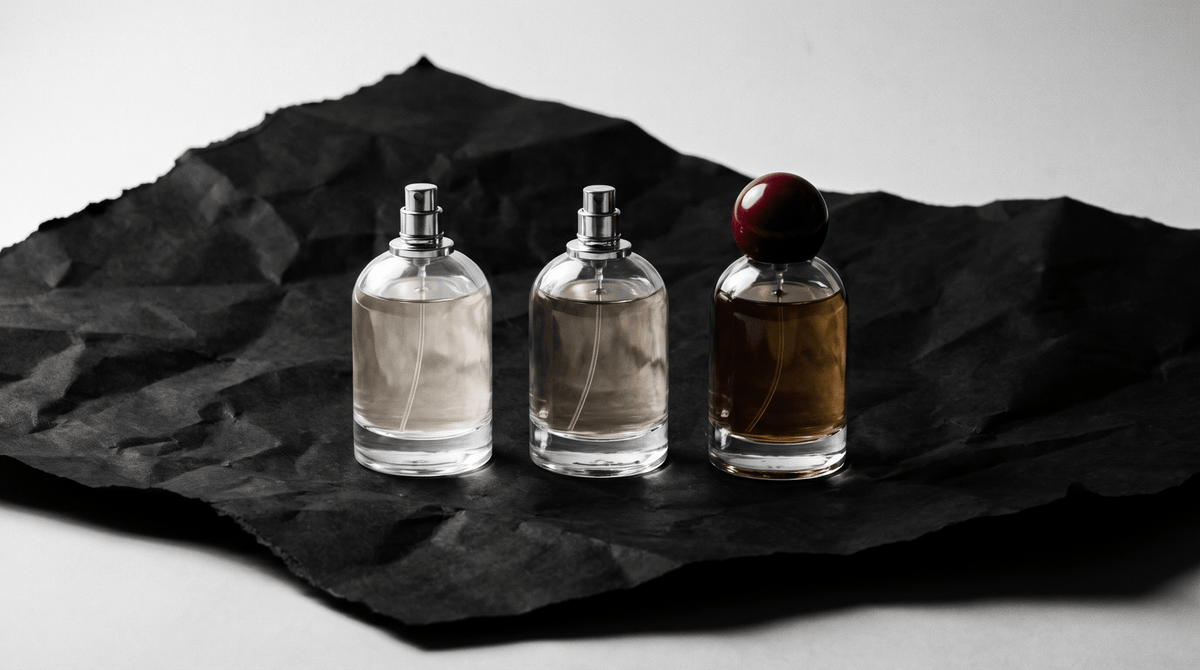
EDT, EDP, extrait, parfum, cologne - the labels on a fragrance box describe one main thing: how much perfume oil is dissolved in the alcohol. That concentration shapes longevity, projection, price, and sometimes even how the scent smells. Here's what each term actually means, what it changes on your skin, and the myth about "stronger" that costs people money.
The concentration ladder
| Type | Perfume oil | Typical longevity | Character |
|---|---|---|---|
| Eau de Cologne (EDC) | 2-4% | ~2 hours | Light, citrusy splash - refresh and reapply |
| Eau de Toilette (EDT) | 5-15% | ~4-6 hours | Brighter, airier - top notes forward |
| Eau de Parfum (EDP) | 15-20% | ~6-8 hours | Richer, deeper - the modern default |
| Extrait de Parfum | 20-40% | 8-12+ hours | Dense, intimate - a close, long aura |
Ranges are conventions, not regulations - houses decide their own formulas, which is exactly why the same name can smell different across concentrations.
What concentration changes on your skin
Longevity. More oil generally means the scent survives longer before fading. If your EDT disappears by lunch, the EDP or extrait version is the usual fix.
Projection vs intimacy. Counterintuitively, extraits often project less than EDPs: less alcohol means less lift. They wear as a rich aura close to the skin rather than filling a room. EDTs, with more alcohol, can feel louder in the first hour and then retreat.
The scent itself. Houses frequently re-balance the formula between concentrations - the EDT of a fragrance may push citrusy top notes where the EDP deepens the base. Famous example: many classics smell noticeably different across their EDT/EDP/extrait versions. Never assume; test the exact concentration you plan to buy.
Price. Perfume oil is the expensive part, so price climbs with concentration - extraits routinely cost 50-100% more than the EDP.
The myth: "EDP is always stronger and better"
Not quite, three ways. First, concentration conventions overlap - one house's EDT can carry more oil than another's EDP. Second, performance depends as much on the notes as the ratio: a woody-amber EDT will outlast a citrus EDP every time. Third, "more" isn't better for every context - an office or summer day often favours the lighter version, while extraits shine on winter evenings. Match concentration to use, not to bragging rights.
Which one should you buy?
Daily office wear / hot weather → EDT or a discreet EDP: presence without a scent bubble.
All-day longevity from one application → EDP: the sweet spot of performance and price for most people.
Evenings, cold weather, signature-scent intimacy → extrait: the longest, closest, most refined wear.
And when a fragrance exists in several concentrations, the honest answer is: try both on skin before paying full-bottle money. A 2-5 ml decant of each costs a few euros and settles the EDT-vs-EDP question for your skin and your climate - here's how to run that test properly, and how long each decant size lasts.
EDTs, EDPs and extraits from 1000+ authentic fragrances, hand-decanted in 2, 5 or 10 ml. Free standard shipping to 230+ countries.
Shop decants by fragranceFAQ
What's the difference between EDT and EDP?
Concentration of perfume oil: EDT is roughly 5-15%, EDP 15-20%. In practice EDP usually lasts 2-3 hours longer and wears deeper, and often costs 20-40% more per ml.
Does eau de parfum last longer than eau de toilette?
Usually yes - ~6-8 hours vs ~4-6. But note composition matters as much as concentration: heavy woods and ambers outlast citrus at any ratio.
What is extrait de parfum?
The highest common concentration (~20-40% oil). It wears longest - often 8-12+ hours - but projects more softly, as an intimate aura rather than a room-filling cloud.
Is parfum the same as extrait?
Yes - "parfum", "pure parfum" and "extrait de parfum" all refer to the top concentration tier.
Do EDT and EDP of the same fragrance smell the same?
Often no - houses re-balance formulas between concentrations. Test the exact version you intend to buy, ideally as a decant of each.
Which concentration is best value?
Per hour of wear, EDP is usually the sweet spot. But the real value move is testing first: a decant costs a fraction of guessing wrong on a full bottle.


