

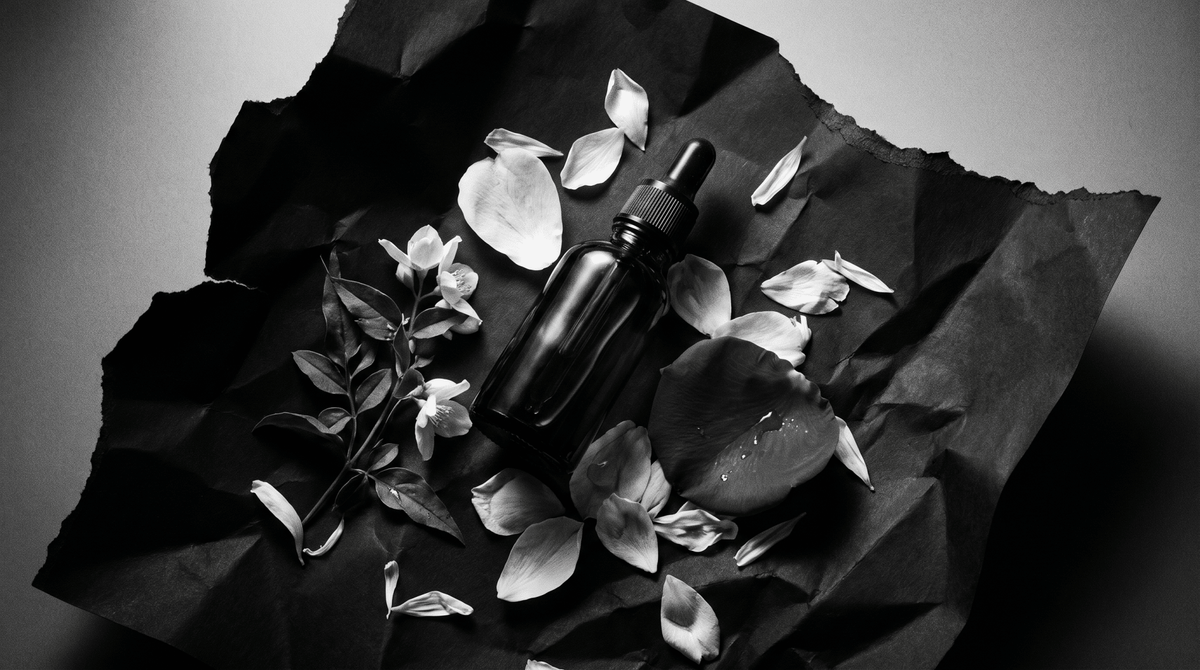
You're probably here because a floral scent caught you off guard. Maybe it was the soft creaminess of jasmine on someone's scarf, the clean hush of lavender after a shower, or the velvety bloom of rose from a perfume blotter that smelled far more alive than “rose” had any right to smell. Then you started looking into floral scented oils and found a maze. Essential oil. Fragrance oil. Attar. Absolute. Skin-safe or diffuser-only. Natural or synthetic. Pretty names, not enough clarity.
That confusion is normal. Floral materials are some of the most beautiful things in perfumery, but they're also some of the easiest to misunderstand. A flower note can smell airy as morning linen, plush as silk, green as snapped stems, or narcotic and dusk-like. Often, the difference isn't just the flower itself. It's the type of oil and how that scent was captured.
Think of this guide as a slow walk through a perfume garden with someone who stops to crush the leaf, smell the petal, and explain why two bottles labeled “jasmine” can feel like two different worlds.
Table of Contents
- The Timeless Allure of Floral Scents
- Decoding the Types of Floral Scented Oils
- A Garden of Notes Popular Floral Scents
- How to Apply Floral Oils for Lasting Fragrance
- Safety Storage and Shelf Life
- The Art of Blending and Layering Floral Scents
- Discovering Your Perfect Floral Scent
The Timeless Allure of Floral Scents
Walk through a garden after rain and you'll notice something curious. Not every flower speaks at the same volume. Rose can feel plush and rounded. Neroli flickers brighter, almost sunlit. Jasmine can arrive with a softness that turns, slowly, into something warm and sensual. Floral scented oils try to hold those fleeting moments in a bottle.
People often treat floral fragrance as decorative, as if it exists only to smell pretty. Perfumers know better. Florals are architecture. They can lift a composition, soften sharp woods, illuminate citrus, or wrap an amber base in skin-like warmth. A rose note can act like velvet draped over carved wood. Orange blossom can brighten a blend the way white linen brightens a dim room.
That relationship with flowers is old. Very old. Records of Egyptian use of aromatic oils go back to 4,500 B.C.E., and broader aromatic plant use may reach back to around 18,000 B.C.E. according to a review in Cosmetics & Toiletries on essential oil history and production. The same review notes that modern essential oil science draws from more than 1,000 plant families and roughly 2,000 species identified as essential oil sources. That's part of why floral scented oils don't feel like a passing trend. They belong to a long human habit of turning petals, leaves, resins, and bark into ritual, adornment, comfort, and luxury.
Floral oils aren't a side road in fragrance history. They're one of the oldest roads we have.
Some of perfumery's most beloved floral notes, including rose, jasmine, lavender, and neroli, come from those long botanical traditions. That matters because when you smell a floral oil today, you're not just smelling “something feminine” or “something fresh.” You're smelling a craft shaped over millennia.
Why florals still feel personal
Floral scents have unusual emotional range. They can feel polished, intimate, nostalgic, serene, flirtatious, or ceremonial. The same family holds bridal orange blossom, meditative lavender, lipstick rose, and indolic white flowers that feel almost nocturnal.
A few reasons people connect so strongly with florals:
- Memory clings to them. Floral notes often remind people of gardens, soap, skin cream, weddings, prayer spaces, spring air, or a relative's dressing table.
- They shift beautifully on skin. A floral can start cool and green, then become honeyed, powdery, creamy, or musky.
- They're rarely just one thing. Even a “simple” flower note usually carries texture. Petal, stem, pollen, dew, spice, fruit, tea, wax.
That complexity is exactly why choosing the right floral scented oil starts with knowing what kind of oil you're smelling.
Decoding the Types of Floral Scented Oils
The biggest confusion in this category isn't the flower. It's the format.
Think of floral scent materials the way you'd think about fruit. A fresh peach, a peach preserve, and a peach liqueur all point to the same source, but they don't taste identical and they aren't meant for the same use. Floral scented oils work in a similar way. Essential oils, fragrance oils, and attars may all suggest the same flower while delivering very different scent experiences.

Essential oils
A floral essential oil is a concentrated aromatic extract taken from plant material. For flowers, the extraction route matters enormously. Peer-reviewed technical discussion notes the use of steam distillation, hydrodistillation, enfleurage, and supercritical CO₂ extraction, and it emphasizes that delicate floral materials often benefit from lower-heat methods because they better preserve the fresh blossom character and heat-sensitive compounds. That same source also notes a trade-off between yield and quality, along with the importance of careful post-harvest handling and storage in maintaining floral character, as described in this technical review of floral essential oil extraction.
In plain language, extraction is like cooking. Gentle heat can preserve nuance. Too much heat can flatten it.
Fragrance oils
A fragrance oil is built for scent performance rather than botanical purity alone. It may be composed of synthetic aroma materials, natural isolates, natural extracts, or a mix. Such a blend sometimes raises suspicion, but perfumery has always depended on composition, not just raw harvest. A fragrance oil can mimic a flower that is difficult to extract, expensive to produce, or unstable in use.
If essential oil is like pressing juice from a fruit, fragrance oil is more like a chef rebuilding the taste from several ingredients. Done well, it can be beautiful, stable, and expressive. It can also smell more linear, meaning the scent profile stays steadier from start to finish instead of unfolding in the more volatile, shifting way some naturals do.
Attars
An attar sits in a more traditional, often more meditative corner of perfumery. In broad terms, attars are perfume oils built from botanical materials using classical methods and oil bases. They often feel rounder, softer, and more continuous on skin than alcohol-based perfume. A floral attar may smell less like a photorealistic petal and more like a flower passing through silk, wood, and warm skin.
A quick comparison
| Type | Main character | Typical feel | Best for |
|---|---|---|---|
| Essential oil | Plant-derived extract | Complex, volatile, sometimes less predictable | Aromatic study, natural blends, diffusion, some perfumery uses |
| Fragrance oil | Composed scent material | Stable, often clearer in theme, broader stylistic range | Candles, soaps, personal scent products, layered effects |
| Attar | Traditional oil perfume style | Dense, smooth, intimate, lingering | Personal wear, slow development, ritual-like wear |
Practical rule: Before judging a floral oil, ask what it's trying to be. A steam-distilled floral, a modern fragrance oil, and an attar shouldn't be expected to perform the same way.
Why the type changes the experience
If you've ever smelled one rose oil that felt lemony and green, then another that felt jammy and velvet-dark, the flower wasn't the only variable. Extraction, formulation style, and base all shape the result.
That's why buying floral scented oils by name alone can disappoint. “Jasmine” tells you the theme. It doesn't tell you whether you're getting fresh petals at dawn, jasmine tea steam, creamy white petals at dusk, or a polished perfume interpretation designed for candles and soap.
A Garden of Notes Popular Floral Scents
“Floral” sounds singular until you start smelling closely. Then it opens like a fan. Some florals are sheer and breezy. Others feel almost edible. Some wear like crisp cotton. Others settle like satin.
A good way to learn floral scented oils is to group them by mood and texture, not by botany.
Fresh and light florals
These are the flowers people often call “clean,” “airy,” or “easy to wear.”
Lavender often sits at the doorway between floral and herbal. In perfumery, it can smell cool, aromatic, and freshly laundered rather than powdery. If you like a scent that clears the air around you, lavender is often where that instinct begins.
Neroli has brightness and lift. It feels white, sparkling, and slightly green, as if petals were carrying sunlight. It works beautifully in warm weather and in fragrances that need elegance without heaviness.
Freesia is the watercolor painter of the floral world. It suggests petals more than it insists on them. It's ideal for people who think they don't like florals but enjoy scents that feel transparent and polished.
Rich and heady florals
These are the flowers with shadows. They bloom louder, creamier, and closer to the skin.
Jasmine can be many things, which is why it fascinates perfumers. Some jasmine expressions feel tea-like and translucent. Others feel lush, humid, and skin-warm. If you want a useful vocabulary lesson, compare a bright jasmine style with a tea-tinged interpretation such as the scent profile explored in this guide to jasmine tea fragrance.
Tuberose doesn't whisper. It's creamy, narcotic, and often a little green at the start, like snapped stems under the bloom. Tuberose suits evenings, cool air, and moments when you want presence.
Gardenia often reads as plush and creamy, almost as if a white flower had been folded into velvet lotion.
Some white florals don't smell “sweet” so much as illuminated. They fill space the way candlelight fills a room.
Classic and powdery florals
These are often the notes people associate with elegance, dressing tables, and classic perfume structure.
Rose is the grand library of floral perfumery. One rose can smell citrusy and dewy. Another can smell jammy, spicy, or powder-soft. If you enjoy botanical skincare as well as scent, you might like these natural skin secrets from Dollhouse Botanicals, especially because geranium often sits close to rose in the perfumer's mind.
Iris is less about petals than texture. It can feel powdery, cool, and refined, like suede gloves dusted with violet powder. If rose is velvet, iris is cashmere.
Violet often gives a delicate, cosmetic softness. It can feel shy at first, then subtly addictive.
How to find your floral lane
Try asking yourself these questions:
- Do you want freshness or richness? Lavender and neroli lean fresh. Jasmine and tuberose lean fuller.
- Do you like petal realism or perfume polish? Some florals smell garden-like. Others smell composed and dressed.
- Do you want daywear or drama? Freesia and soft rose are easy daytime choices. Tuberose and deep jasmine often bloom best after dark.
The goal isn't to memorize flower names. It's to notice the emotional temperature of each note.
How to Apply Floral Oils for Lasting Fragrance
Application changes everything. A floral oil can feel faint, radiant, soft, or enveloping depending on where you place it, what you pair it with, and how concentrated the material is. Many people blame the oil when the actual issue is placement.
Warm skin acts like a quiet diffuser. Fabric acts like a slow archive. Hair carries scent gently because it moves. Each method creates a different kind of trail.

Apply where warmth helps
Pulse points matter because they're naturally warmer. That warmth helps the fragrance rise in a soft halo rather than sit flat. If you want a refresher on where those spots are and why perfumers use them, this explanation of pulse points in fragrance is useful.
A simple routine works well:
- Start with wrists, but don't scrub them together. Friction can muddle the opening.
- Add a small amount behind the ears if you want an intimate scent cloud.
- Try the base of the throat or collarbone for a more elegant lift.
- Use less than you think you need. Floral oils often bloom over time.
Use skin prep to your advantage
Dry skin tends to let fragrance disappear faster. Oily or well-moisturized skin usually holds it better. Applying a floral oil over a plain, unscented cream or body oil gives the scent something to cling to.
That's especially helpful for softer florals such as freesia, neroli, and tea-like jasmine styles. They don't always need more quantity. They often need a better surface.
A floral oil on moisturized skin behaves like watercolor on good paper. The shape stays clearer.
Hair and clothing need a lighter hand
Hair can make floral scents feel dreamlike because every turn of the head releases a little more aroma. But concentrated oils can weigh hair down, so it's better to apply a small amount to a brush, to the ends, or to a properly diluted hair-safe format rather than dabbing heavy oil directly near the roots.
Clothing can hold a floral beautifully, especially natural fibers. Still, test first. Some oils can mark delicate or pale fabrics.
A quick guide:
- Hair ends or brush: Best for a soft aura
- Scarf or lining: Great for a private scent memory
- Inside a cuff or hem: Useful when you want subtle longevity without full projection
Diffusers and ambient scenting
Not every floral oil belongs on skin. Some shine best in the air. Lavender can make a room feel freshly opened. Neroli can add brightness. Rose can feel surprisingly elegant in small spaces.
If you diffuse floral scented oils, keep the blend restrained. A room doesn't need to smell like a bouquet shop. It should feel like one beautiful stem in water.
Try this approach:
- One dominant floral: rose, lavender, jasmine, or neroli
- One supporting note: a citrus, a green note, or a soft wood
- Gentle intensity: enough to notice, not enough to tire your nose
Reapply with intention
Reapplication isn't failure. It's part of wearing perfume attentively. Florals with a delicate top can fade from your awareness even while they remain noticeable to others.
A tiny touch-up on one pulse point often works better than redoing everything. Think of it as refreshing a flower arrangement with clean water, not replacing the whole vase.
Safety Storage and Shelf Life
This is the part many guides skip or blur with vague reassurance. That's a mistake. Floral scented oils are pleasurable, but pleasure lasts longer when you handle the materials with care.
One of the biggest information gaps in public-facing floral oil content is leave-on skin safety. Available consumer content often focuses on smell, candle use, or general beauty language while giving much less practical guidance about dilution, ingredient safety, allergen labeling, and real skin-use questions. That gap is described clearly in this discussion of floral fragrance oil information and consumer concerns.
Skin safety starts with caution, not fear
The simplest rule is this. Don't assume every floral oil belongs directly on bare skin at full strength.
Some products are designed for candles, soap, or room scenting rather than leave-on body use. Others may be wearable only when diluted. If your skin tends to react easily, this guide on perfume for sensitive skin is a helpful companion.
A safe routine usually includes:
- Patch testing first: Apply a very small amount of a properly diluted product to a small area and wait before wider use.
- Checking intended use: Body-safe, diffuser-safe, and candle-safe are not interchangeable categories.
- Reading labels carefully: Look for usage instructions and allergen information where available.
Dilution is part of elegance
People sometimes hear “dilute” and think “weaken.” In perfumery, dilution often improves wearability. It lets the scent breathe, unfold, and sit more gracefully on the skin.
A concentrated floral can be overwhelming up close, especially white florals. In a proper carrier, the same material may become softer, clearer, and more beautiful. Like a strong tea, it often needs the right balance to reveal its detail.
Good fragrance manners begin before the first drop touches skin.
Light heat and air are the quiet enemies
Storage affects scent more than many people realize. Floral materials can lose freshness, shift in color, or smell dull if they sit in heat, direct light, or poorly sealed containers.
Treat floral oils the way you'd treat silk or fresh tea leaves. Keep them away from harsh conditions.
A practical storage checklist:
- Dark place: A drawer or cabinet is better than a sunny shelf.
- Stable temperature: Avoid bathrooms with constant steam and temperature swings.
- Tight closure: Oxygen slowly alters aromatic materials.
- Clean applicators: Don't introduce water or debris into the bottle.
Learn to notice when an oil has changed
You don't need lab equipment. Your nose will usually tell you.
Watch for these signs:
| Sign | What it may mean |
|---|---|
| Flattened top notes | The brightest part of the scent may have faded |
| Sharper or sour edges | Oxidation or degradation may have changed the profile |
| Darker color | Not always bad, but worth monitoring alongside smell |
| Cloudiness or contamination | Storage or handling issue |
If a floral oil stops smelling like itself, don't force it into use. Beautiful materials deserve better treatment, and so does your skin.
The Art of Blending and Layering Floral Scents
Wearing a single floral can be lovely. Blending is where things become personal.
Instead of asking, “What does rose smell like?” you begin to ask, “What kind of rose do I want to become?” Cool and green with vetiver. Plush with sandalwood. Sparkling with bergamot. Smoky against incense. Floral scented oils are less like paint-by-number and more like arranging flowers in different vases. The stems are the same. The atmosphere changes.

Start with one flower and one contrast
Beginners often overblend. That usually creates blur. Start with a floral note you understand, then give it one companion from another family.
Some dependable pairings:
- Rose and sandalwood for softness with structure
- Jasmine and citrus when you want lift around richness
- Lavender and woods for calm with depth
- Neroli and musk for clean warmth
- Tuberose and spice if you enjoy drama
Notice the logic. One note carries the theme. The other changes the lighting.
Think in textures, not only notes
A blend doesn't work because two things sound pretty together. It works because their textures support or sharpen one another.
Rose with vanilla can feel plush on plush. Rose with cedar feels more structured. Jasmine with tea feels translucent. Jasmine with amber feels glowing and enveloped.
Ask yourself what the floral lacks:
- Too airy? Add a wood or musk.
- Too heavy? Add citrus or green freshness.
- Too sweet? Add spice, herb, or dry woods.
- Too sharp? Add creaminess through sandalwood or a soft resin.
Simple blend ideas for beginners
You don't need a huge kit. A small set with contrast teaches more.
Try concepts like these in a diffuser or in a properly diluted oil base:
Morning floral
- Neroli
- Lavender
- A touch of soft wood
Velvet rose
- Rose
- Sandalwood
- A faint spice accent
Tea white floral
- Jasmine
- A green or tea-like accent
- Clean musk effect from a compatible perfume layer
Evening bloom
- Tuberose or gardenia-style floral
- Warm amber profile
- Tiny hint of spice
Layering with existing perfume
Layering works best when you decide what job the floral oil should do. It can brighten, soften, sweeten, freshen, or deepen a perfume you already own.
A few examples of intent:
- Add neroli to make a woody perfume feel more luminous.
- Add rose to a dry amber to make it feel more romantic.
- Add lavender to a musky skin scent for a cleaner edge.
- Add jasmine to a tea fragrance for more bloom and body.
Keep notes on what happens. Skin chemistry changes the story.
The best blends are often the ones that make people pause and say, “You smell wonderful,” without being able to name a single note.
Let the blend rest in your mind
Some pairings don't impress immediately. They unfold slowly. Smell them at application, then again after time passes. Floral materials often reveal their harmony later, once the sharper edges soften and the body of the scent settles.
That patience is part of becoming fluent in fragrance.
Discovering Your Perfect Floral Scent
Choosing floral scented oils from descriptions alone is risky. “Rose” might mean dewy garden petals, sugared jam, vintage powder, or dark velvet. “Jasmine” might be tea-like, green, creamy, indolic, or almost fruity. Even when the note name is accurate, the lived experience can be completely different on your skin.
That's why sampling is the smartest way to discover floral fragrance. It lets you compare styles without the pressure of a full-bottle commitment. More importantly, it lets you test in real life. On your skin. In your climate. With your wardrobe, your moisturizer, your pace of movement, and your own nose at different hours of the day.

A blotter tells you the outline. A sample tells you the truth.
Sampling is especially useful with florals because tiny differences matter. One jasmine may feel too lush. Another may feel perfect because it carries a tea facet or a cleaner musk base. One rose may seem too powdery until you wear it on a cool evening and realize it becomes graceful rather than old-fashioned. Discovery sizes make those comparisons possible.
There's also a practical pleasure in side-by-side testing. You can wear neroli on one wrist and rose on the other. Compare a creamy white floral with a cleaner lavender-based composition. Learn whether you prefer flowers softened by woods, lifted by citrus, or wrapped in musk. That kind of smelling builds taste quickly and without waste.
For anyone building a fragrance wardrobe, samples do more than save money. They reduce disappointment and sharpen judgment. You stop buying names and start choosing experiences.
If you want a refined, low-risk way to explore floral perfumes before committing to a full bottle, Decant Sample makes that process easy. You can test authentic luxury fragrances in smaller sizes, compare floral styles on your own skin, and discover whether your perfect bloom is rose, jasmine, neroli, tuberose, or something more unexpected.


