

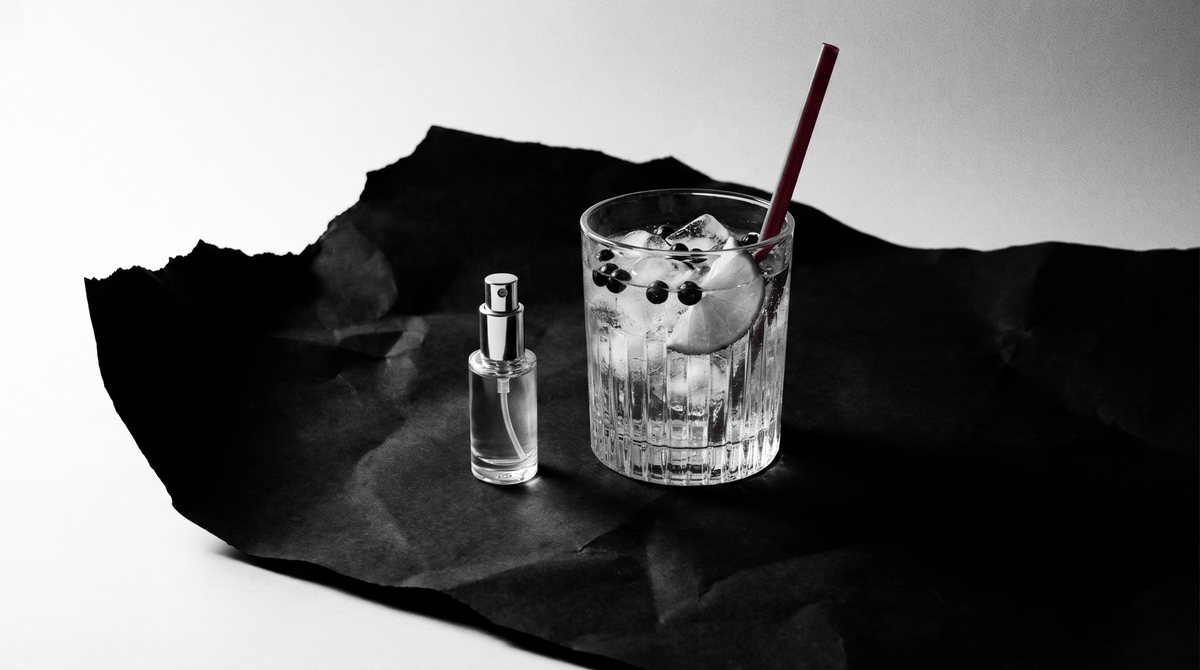
You’re probably reading this while thinking about one of two things. Either you’ve smelled a perfume described as a gin and tonic fragrance and wondered what that means on skin, or you love the drink itself and want to know how perfumers turn something cold, sparkling, bitter, and botanical into scent.
That curiosity makes sense. A gin and tonic isn’t a simple smell. It’s a small illusion made of contrasts: dry juniper against juicy lime, bitterness against freshness, sharp fizz against the softness of melting ice. In perfume, that effect doesn’t come from one ingredient. It comes from construction. A perfumer builds it the way a chef builds a dish or a bartender builds a serve, note by note, tension by tension.
The fun starts when you stop asking, “What notes are in it?” and start asking, “How did they make my nose think this smells chilled, fizzy, and bitter?”
Table of Contents
- Capturing Lightning in a Bottle The Gin and Tonic Accord
- Deconstructing the Perfect Serve Key Fragrance Notes
- From Gin Madness to Fragrance Icon A Brief History
- The Perfumers Art How a Gin and Tonic Scent is Built
- Beyond the Highball Glass Exploring Styles and Variations
- How to Wear Layer and Judge Your Fragrance
- Finding Your Perfect Pour A Guide to Sampling and Discovery
Capturing Lightning in a Bottle The Gin and Tonic Accord
A good gin and tonic arrives in layers. First the cold glass touches your hand. Then the scent rises: lime peel, juniper, something green and brisk, and that faint bitter snap that tells you tonic is in the mix. The drink feels bright before it even tastes bright.

Perfumers chase exactly that moment. Not the liquid itself, but the sensation around it. They want the nose to register sparkle, bitterness, aromatic dryness, and a kind of cooling lift. That’s why a gin and tonic fragrance isn’t one note. It’s an accord, meaning several materials are blended so tightly that they read as a single recognizable idea.
If you’ve ever smelled a crisp citrus cologne and thought, “Nice, but that’s not really gin and tonic,” you’ve already noticed the difference. Citrus alone gives brightness. A proper gin and tonic accord also needs dryness from gin botanicals, a bitter edge to suggest quinine, and some trick of texture so the composition feels airy rather than flat.
The accord is an illusion, not an ingredient
It's like painting light on glass. There’s no literal “fizz” material sitting in a bottle. Instead, perfumers use contrasts. Sharp notes flash at the top. Green or watery accents imply chill. Bitter materials tighten the composition so it doesn’t smell like lemonade.
A gin and tonic perfume succeeds when your nose believes in temperature and texture, even though perfume has neither.
Some fragrances lean sunny and Mediterranean. Others sharpen the lime, boost the juniper, and feel more like a freshly poured highball. If you enjoy the polished citrus-aromatic style of Tom Ford Neroli Portofino in sample sizes, you’ve already met part of the same family mood: radiant freshness with structure.
What makes the gin and tonic version special is its tension. It’s less about pretty citrus and more about a crafted illusion of a drink still alive with bubbles.
Deconstructing the Perfect Serve Key Fragrance Notes
A perfumer building this accord thinks less like someone listing notes on a box and more like someone balancing a recipe. Every material has a job. Some create the spirit. Some mimic tonic. Some behave like garnish. And a few exist only to suggest movement in the air.

The three pillars of the illusion
The first pillar is gin. Juniper lives here, providing the piney, dry, resinous core that tells your brain, “This isn’t just citrus water.” Coriander, angelica, peppery spices, and aromatic herbs often support it. Together they create that cool botanical sternness that makes gin smell precise rather than juicy.
The second pillar is tonic. This is the hardest part. Tonic doesn’t smell loud in real life, but in a fragrance it has to leave an impression. Perfumers often build it through bitterness, dryness, and a faintly sparkling citrus-peel effect. If the tonic side is too sweet, the whole perfume turns into soft soda. If it’s too harsh, it smells medicinal.
The third pillar is garnish. Lime is the most common because it cuts through the accord with a sour-green brightness. Lemon can make the scent cleaner and more classical. Grapefruit adds pithy bitterness. Cucumber can suggest cold water and condensation on glass. Herbs like rosemary or mint can push the composition toward a garden-fresh direction.
Gin and Tonic Accord Note Breakdown
| Note Category | Key Ingredients | Olfactory Effect |
|---|---|---|
| Gin notes | Juniper, coriander, angelica, peppery aromatics | Dry, piney, botanical, crisp |
| Tonic notes | Bitter accords, quinine-style effects, citrus peel | Sharp, bitter, sparkling, slightly woody |
| Garnish accents | Lime, lemon, grapefruit, cucumber, mint, rosemary | Juicy lift, coolness, freshness, green snap |
| Texture builders | Ozonics, watery notes, airy musks | Suggest fizz, chill, and lift |
| Structure notes | Cedar, vetiver, moss, soft woods | Keep the accord from disappearing too fast |
The notes people often misunderstand
Many readers assume juniper is enough. It isn’t. Juniper says “gin,” but it doesn’t say “gin and tonic.” Without a bitter-citrus frame around it, juniper can read as coniferous, spicy, or even vaguely medicinal.
Lime gets misunderstood too. In this accord, lime isn’t there just to smell tasty. It acts like a flashbulb. It brightens the opening, sharpens the drink effect, and helps the tonic feel fizzy rather than syrupy.
Then there’s cucumber, a note some people love and some avoid. Used carefully, it doesn’t smell like salad. It smells like coldness, watery crunch, and the inside of a chilled glass.
A quick way to smell the structure is to ask three questions as the perfume opens:
-
What gives the dryness
Usually juniper or other aromatics create the gin skeleton. -
What gives the bite
Bitter-peel or quinine-like effects create the tonic snap. -
What gives the lift
Citrus, mint, watery notes, or ozonic touches make the accord feel bright and mobile.
Practical rule: If a gin and tonic fragrance smells only citrusy, it’s missing the bitter spine. If it smells only woody and herbal, it’s missing the splash.
That balance is why the best examples feel refreshing without becoming bland.
From Gin Madness to Fragrance Icon A Brief History
Gin carries more history than its breezy modern image suggests. Today the phrase “gin and tonic” can feel elegant, relaxed, and slightly cosmopolitan. It didn’t begin that way.

When gin became a cultural force
Gin’s rise was dramatic. Le Parfum Magazine notes that by the late 1680s, Dutch gin exports had surpassed 10 million gallons annually, and London’s “Gin Madness” later pushed consumption to 11 million gallons in 1750 before the 1751 Tippling Act cut it by over 80% to 2 million gallons. That change didn’t just reduce volume. It changed gin’s social meaning.
At its most chaotic, gin was associated with excess, cheap intoxication, and public disorder. After regulation tightened, the spirit’s image slowly shifted. It became drier, more controlled, more refined. That arc matters because perfume often borrows not only a smell, but also a cultural mood.
Why that history matters in perfume
Modern gin and tonic fragrances almost always draw from the refined chapter of that story. They don’t try to smell heavy, boozy, or unruly. They aim for composure. Fresh lime. Polished juniper. Bitter tonic. Clean woods.
That’s part of why the accord feels contemporary even though its inspiration is old. It carries a memory of gin’s botanical roots and its later transformation into something urbane and ceremonial. A sprig of herb, a chilled glass, a measured pour. The scent isn’t just “drink-like.” It suggests control and ease.
A useful contrast is this: rum in fragrance often reads warm, sweet, plush. Whiskey may feel smoky or ambered. Gin and tonic moves the opposite way. It narrows the line, brightens the edges, and introduces bitterness as elegance.
- Historic gin gave perfumers a botanical palette.
- Refined gin culture gave them a social image of sophistication.
- The cocktail format gave them a built-in structure of spirit, mixer, and garnish.
That combination helps explain why this accord feels so instantly recognizable when it’s done well. It isn’t only an aroma. It’s an atmosphere.
The Perfumers Art How a Gin and Tonic Scent is Built
Genuine craft starts when a perfumer asks a difficult question: how do you make something smell bubbly and cold when perfume is a still liquid at room temperature? The answer is sequencing. A gin and tonic accord has to arrive in stages that mimic the experience of lifting the glass, inhaling the garnish, then catching the dry bitterness underneath.
M. Micallef’s GnTonic shows that architecture clearly. Venba Fragrance describes perfumer Sidonie Grandperret’s structure as Bigarade, Lime, and Spicy Mint at the top, an earthy Cypriol heart, and Vetiver with White Musk in the base, with vetivone at 15-20% contributing tenacity that lasts over 12 hours.
The opening creates the fizz
Bigarade and lime don’t just make the perfume smell citrusy. They create attack. Bigarade brings bitter orange peel rather than soft orange juice, which matters because peel smells taut and dry. Lime adds a sharper, greener light. Spicy mint cools the surface and tricks the nose into perceiving movement.
This is one of perfumery’s oldest sleights of hand. The perfumer uses volatile notes that lift quickly from skin, and your brain reads that sudden burst as sparkle.
The middle keeps the drink from collapsing
Fresh openings vanish fast if there’s nothing underneath them. That’s where a note like cypriol becomes valuable. Cypriol has an earthy, woody, slightly shadowed character. In a gin and tonic fragrance, that sounds counterintuitive at first. Why put something earthy under something fizzy?
Because the perfume needs a bridge. Without one, the top feels disconnected from the base, like lime sprayed over wood. Cypriol absorbs some of the citrus sharpness and turns it into aromatic depth. It’s the quiet carpenter of the composition.
In a strong accord, the middle doesn’t grab attention. It keeps the illusion from breaking.
The base turns refreshment into a fragrance
A literal drink effect can be fun for a few minutes, but perfume has to live on skin. Vetiver and white musk solve that problem in different ways. Vetiver gives dry rootiness and a faint smoky thread, which keeps the accord elegant instead of sugary. White musk softens the whole structure and leaves a clean trail after the brighter notes recede.
Here’s the simplest way to think about the build:
-
Flash
Citrus, mint, and bitter peel suggest fizz and chill. -
Bind
Aromatic woods or earthy notes connect the top to the rest of the perfume. -
Anchor
Musk, vetiver, moss, or ambery materials keep the accord wearable for hours.
For those new to reading note pyramids, a common point of confusion arises. They expect the listed notes to smell separate, like ingredients laid out on a table. In reality, the goal is the opposite. The perfumer wants lime to sharpen the tonic effect, mint to exaggerate coldness, and the woods to keep the whole thing from floating away.
That’s construction. Not a note list, but a planned illusion.
Beyond the Highball Glass Exploring Styles and Variations
Not every gin and tonic fragrance aims for the same realism. Some smell like the drink itself, right down to bitter peel and chilled condensation. Others use the accord as a springboard into something more woody, more musky, or more abstract.
Literal versus interpretive styles
The literal style usually opens with a snap of juniper and citrus that feels almost photorealistic. You smell it and think immediately of a poured drink. This style is playful, refreshing, and often very easy to wear in warm weather.
Interpretive versions take the same idea but soften or redirect it. A perfumer may keep the opening bright, then steer it toward cedar, vetiver, moss, or amber. The result still references gin and tonic, but it wears more like a composed fragrance than a trompe-l’oeil cocktail.
That difference matters when people say, “I want a gin and tonic scent.” Some want realism. Others want the mood without the literal garnish.
Why concentration changes the experience
Art de Parfum’s Gin & Tonic Cologne is a useful example because the style is tied directly to concentration. Basenotes describes it as a cologne-level fragrance at 5-8% concentration, using juniper’s terpinen-4-ol and grapefruit’s nootkatone for a vivid opening, then settling into an ambroxan and vetiver base with a 4-6 hour dry-down.
That tells you a lot about how to expect it to wear. A lighter concentration often gives more immediate sparkle and less density. An Eau de Parfum, by contrast, may feel less like a splash and more like a full composition built around the cocktail idea.
A quick comparison helps:
-
Cologne style
Brighter opening, more lift, often more realistic at first sniff. -
Eau de Parfum style
More body, more base presence, often less literal and more polished over time. -
Woody-aromatic style
Uses the accord as an opening scene, then moves toward a more traditional fragrance shape.
If your taste runs toward green citrus with aromatic herbs, Jo Malone Lime Basil & Mandarin in travel-friendly sizes sits near this territory in spirit, even though it isn’t marketed strictly as a gin and tonic perfume. That’s useful because the category often overlaps with citrus aromatics, colognes, and herbal summer scents.
The important thing is to decide whether you want the glass on the table, or the memory of the glass after the party has moved indoors.
How to Wear Layer and Judge Your Fragrance
Fresh cocktail-inspired perfumes can be deceiving. They smell easy, but they’re among the trickiest styles to judge well. Their most charming features often appear early, then shift quickly, and that can make buyers misread both quality and performance.

One challenge is that reliable performance information is often thin. Demeter’s gin and tonic collection page highlights a broader data gap around longevity and projection in this fragrance niche, especially regarding how these scents behave in heat and how concentration affects wear. That means your own testing method matters more than usual.
Test it like a perfumer would
Don’t judge a gin and tonic fragrance from the first minute alone. That opening is designed to charm you. It’s the aromatic equivalent of bubbles racing up a glass.
Try this instead:
-
Spray on skin, not only paper
Paper shows the outline. Skin shows the actual performance and how bitterness, citrus, and woods settle. -
Give it stages
Smell at the opening, then later when the sparkle softens. A good one should still feel coherent after the initial flash fades. -
Test in the weather you’ll wear it in
Warm air can make the citrus sing and also push the top away faster.
Wear test advice: Freshness is only half the story. The dry-down tells you whether the perfume was built well.
A short visual explainer can help if you like seeing how others evaluate scent in practice.
How to make a fresh accord last better
You can’t turn a sparkling cologne into a dense resinous perfume, and you shouldn’t try. But you can improve how it wears.
Apply it to moisturized skin. Fresh top notes usually perform better when the skin isn’t dry. If you enjoy layering, pair the scent with something subtle and woody rather than something sweet. A soft musk or light vetiver base can support the accord without swallowing its brightness.
You should also think about occasion. This style excels in daytime, spring, summer, travel, and moments when you want to smell polished without feeling heavy. It can work at night too, but usually when the setting is relaxed rather than formal.
A simple judging checklist works well:
| What to Judge | What to Notice |
|---|---|
| Opening | Does it smell like fresh citrus only, or like a real drink accord? |
| Mid-stage | Does the bitterness stay believable, or turn flat? |
| Dry-down | Do woods and musks support the freshness, or erase it? |
| Mood | Does it feel crisp and composed, or merely sharp? |
The best gin and tonic fragrance doesn’t just smell cold at first. It keeps the memory of that coldness alive after the citrus has moved on.
Finding Your Perfect Pour A Guide to Sampling and Discovery
This category rewards patience. More than many perfume styles, a gin and tonic fragrance can impress quickly and mislead just as quickly. A dazzling opening may hide a thin structure. A quieter opening may unfold into something much more elegant after a little time on skin.
Why sampling matters more with this style
Sampling helps because this accord is built on volatile materials. Citrus, herbs, watery effects, and fizzy accents are often the first to rise and the first to shift. If you only smell from a cap or a paper strip, you’re judging the overture and missing the performance.
A proper test should answer a few practical questions. Does the perfume stay pleasantly bitter, or go sour on your skin? Does the juniper remain polished, or become too sharp? Does the base suit you once the cocktail effect fades?
If you want a disciplined method, this guide on how to properly test a perfume step by step gives a solid framework for comparing scents without rushing.
How to avoid disappointment and fakes
There’s another reason to sample carefully. Authenticity matters, especially in niche fragrance categories where public guidance can be thin. Le Parfum Magazine notes that as categories like gin and tonic fragrances grow, counterfeit risk becomes a more serious concern, and sourcing decants from verified original bottles can reduce the chance of getting diluted or fake product.
That risk is especially frustrating with a style like this because subtle freshness is easy to compromise. A fake or poorly handled sample may still smell vaguely citrusy. What usually disappears first is the refinement: the bitter precision, the cool botanical lift, the smooth transition into the base.
When you sample, pay attention to signs of quality rather than hype:
-
Clarity of opening
The top should feel deliberate, not blurry or harsh. -
Believable bitterness
The tonic effect should tighten the scent, not make it smell medicinal. -
Smooth evolution
Even a playful cocktail accord should move with purpose from opening to dry-down.
Sample small, wear slowly, and let the perfume reveal whether it’s a novelty or a keeper.
That’s the pleasure of this genre. A well-made gin and tonic fragrance can feel effortless, but it’s one of perfumery’s neatest bits of craftsmanship. It asks the nose to smell sparkle, coldness, and bitterness in a liquid that contains none of those things. When the trick works, it feels weightless. When you understand the construction, it feels even better.
If you want to explore gin and tonic fragrance without committing to a full bottle, Decant Sample offers authentic luxury perfume decants in practical sizes for testing, travel, and side-by-side comparison. It’s a smart way to experience how these bright, volatile accords behave on your own skin over time, especially when nuance and authenticity matter.


