

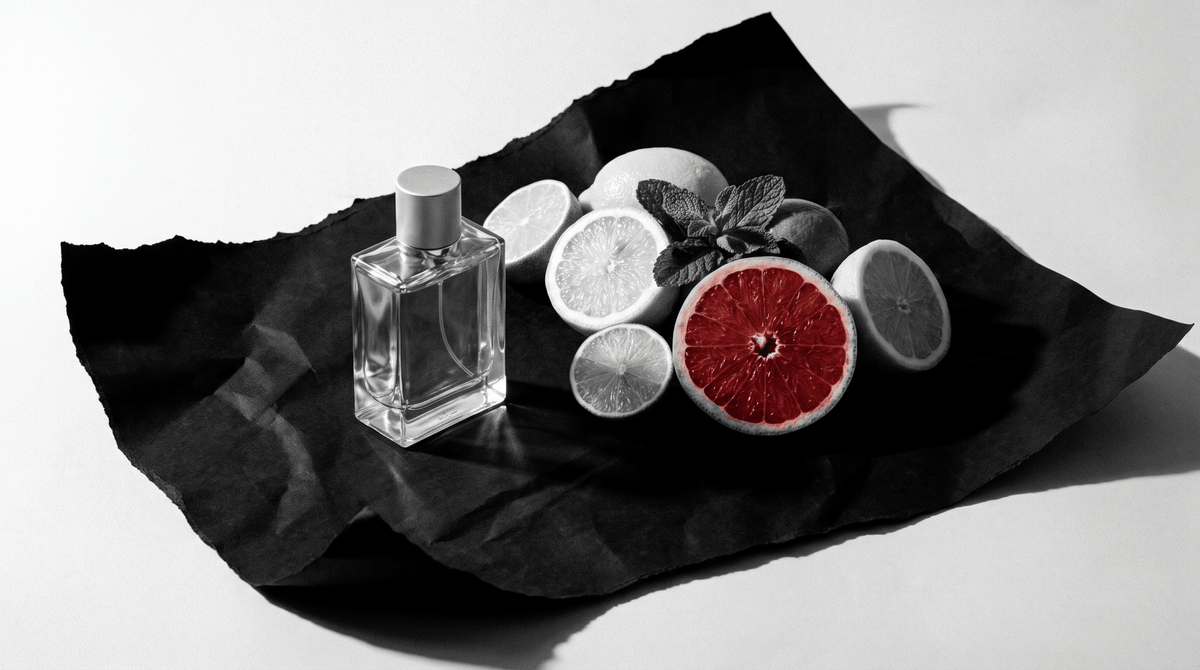
You spray a citrus cologne before heading out. For the first half hour, it feels perfect. Bright, clean, effortless. Then by lunch, it seems to have vanished. That cycle is exactly why so many men keep searching for the best mens citrus cologne and still feel unsatisfied.
The problem usually isn’t that citrus smells bad. It’s that it's often judged too quickly and bought the wrong way. A great citrus scent isn’t just about the first burst of lemon, bergamot, or neroli. It’s about how that brightness is built, how long it holds, and whether it still feels like you after a few hours on skin.
That’s also why citrus keeps winning attention. Men’s fresh citrus scents grew by over 25% year over year from 2022 to 2025, according to Bluemercury’s long-lasting citrus cologne overview. People want freshness, but they also want better performance and more versatility.
Table of Contents
- The Allure and Challenge of Citrus Colognes
- Deconstructing the Scent of Sunshine
- Evaluating Performance Beyond the First Spray
- The Smart Way to Sample and Test Fragrances
- Find Your Signature with Scent Archetypes
- Building and Mastering Your Fragrance Wardrobe
The Allure and Challenge of Citrus Colognes
Citrus colognes do something very few fragrance families can do well. They make you smell awake. Not dressed up. Not heavy. Awake.
That effect is why citrus works for so many situations. Office mornings, warm afternoons, flights, casual dinners, weekends in a white shirt. A good citrus fragrance feels polished without asking for attention.
But the same thing that makes citrus attractive also creates its biggest weakness. The sparkle is fleeting. Many men fall in love with the opening and then get frustrated by the dry-down, because the scent they bought for freshness doesn’t stay fresh in the same way for long.
Practical rule: Don’t judge a citrus cologne by the first five minutes. Judge it by the full arc from opening to dry-down.
The search for the best mens citrus cologne gets easier once you stop asking, “What’s the most popular one?” and start asking three better questions:
- What kind of citrus do I like? Lemon feels different from bergamot. Mandarin feels different from neroli.
- How does it perform on my skin? Reviews can help, but your skin and climate matter more.
- Do I want a pure fresh style or a citrus anchored by woods, musk, or spice? That single choice changes longevity and personality.
Those questions turn fragrance shopping from guesswork into discovery. Citrus isn’t a single smell. It’s a whole family, and once you learn its structure, you stop blind buying and start choosing with purpose.
Deconstructing the Scent of Sunshine
A citrus cologne can smell simple, but its construction isn't simple. Picture it as a house with three levels. The top floor gets all the attention because it's the first thing you see. The middle floor gives the house its personality. The ground floor keeps everything standing.
That’s how fragrance works too.
How the fragrance pyramid actually works
The top notes are your first impression. In citrus scents, these notes typically include lemon, bergamot, orange, grapefruit, or mandarin. They’re bright, energetic, and quick to lift off the skin.
The middle notes arrive after that opening settles. This is often where neroli, orange blossom, herbs, florals, or light spices start shaping the fragrance into something more distinct.
The base notes are the support beams. Musk, woods, soft amber, or vetiver give the citrus something to rest on. Without that support, a citrus fragrance can feel beautiful but brief.

A famous historical example helps make this structure easier to understand. The 1916 launch of Acqua di Parma Colonia established the modern citrus blueprint around Sicilian bergamot, lemon, and orange, and it continues to influence 40% of subsequent citrus formulations, according to Olentium’s discussion of citrus fragrance history.
If a citrus fragrance feels “too sharp,” you probably dislike the top. If it feels “too soapy” or “too musky,” the issue is often in the heart or base.
Decoding the citrus spectrum
Not all citrus smells alike. Many shoppers say they want a citrus fragrance when they really mean one narrow lane within the family.
| Note Family | Aroma Profile | Common Examples |
|---|---|---|
| Zesty and sharp | Crisp, sparkling, tart | Lemon, grapefruit |
| Sweet and juicy | Rounder, softer, more playful | Mandarin, orange |
| Green and refined | Elegant, slightly bitter, aromatic | Bergamot |
| Floral citrus | Airy, polished, sunlit | Neroli, orange blossom |
| Clean aquatic citrus | Fresh, breezy, shower-clean | Citrus with marine or musk accords |
Bergamot is a good example of why nuance matters. It doesn’t smell like simple lemonade. It has freshness, but also a dry, green edge that makes it feel more refined. That’s one reason bergamot-heavy fragrances often appeal to men who want citrus without smelling sugary.
If you’re curious how that profile behaves in a more artistic composition, Le Labo Bergamote 22 at Decant Sample is a useful reference point because it shows how bergamot can move from bright to textured rather than staying linear.
Here’s the shortcut I give customers when they’re unsure:
- Like clean shirts and minimal style? Start with bergamot and neroli.
- Like playful freshness? Try mandarin or orange-forward scents.
- Want bite and energy? Look at lemon and grapefruit.
- Need something smoother for daily wear? Choose citrus with musk or woods underneath.
Once you can name the citrus style you enjoy, fragrance descriptions stop sounding vague. You’re no longer chasing “fresh.” You’re narrowing in on your version of fresh.
Evaluating Performance Beyond the First Spray
You spray a citrus cologne at 8 a.m., catch that bright lemon or bergamot glow, and by lunch you wonder where it went. That moment confuses a lot of buyers. In many cases, the fragrance did not fail. It behaved like citrus.

Why citrus fades faster
Citrus materials are volatile, which means they evaporate quickly. Ingredients such as limonene rise off the skin fast, and that sparkling first impression is often the shortest part of the fragrance.
A benchmark example is DIOR Homme Cologne, which shows about 4 hours of skin longevity, as noted in Man of Many’s guide to fresh citrus fragrances.
That gives you a useful baseline. If your citrus scent lasts in that range, it may be performing normally rather than poorly.
The easier way to understand performance is to separate the fragrance into layers. The citrus top is the flash of sunlight. Underneath, woods, musks, herbs, and resins act more like the frame that stays standing after the flash softens. If a citrus cologne has very little underneath that opening, it will feel clean and beautiful, but it may also feel brief.
What concentration changes in real life
Concentration affects more than strength. It changes texture, weight, and how often you will want to reapply.
Here’s the practical read on common labels:
- Eau de Cologne often feels airy, brisk, and easy to overspray in a good way.
- Eau de Toilette usually keeps more shape after the opening settles.
- Eau de Parfum in citrus often relies on woods, musks, aromatics, or ambery materials to give the brightness more staying power.
That last point trips people up. A higher concentration does not always mean “more citrus.” Sometimes it means “more support around the citrus.” The result can smell richer, smoother, or warmer instead of just fresher.
So the better question is not “Which one is strongest?” Ask, “Which version still smells right on me two or three hours later?”
The best-performing citrus scent for you may be the one whose dry-down still feels like your style, not the one with the loudest opening.
What to watch on your own skin
Two men can wear the same fragrance and get different stories from it. One keeps the green edge of bergamot for hours. On someone else, that same scent may turn soft, musky, and almost soapy within an hour.
That is why performance should be judged in stages, not in the first thirty seconds.
Use this simple framework:
-
Opening quality
In the first spray, does the citrus smell sharp, juicy, bitter, polished, sweet, or synthetic? -
Mid-stage identity
After the sparkle settles, what takes over? You may notice florals, herbs, woods, salt, or clean musks. -
Final comfort
In the late dry-down, do you still want to smell like this, or are you only missing the opening?
Climate matters too. Heat can make citrus bloom fast and vanish fast. Cooler air can slow that curve and keep the scent closer to the skin.
If you want cleaner results, use a repeatable skin test instead of judging from one quick wear. A step by step method for properly testing a perfume helps you compare opening, development, and dry-down without guessing.
This is also where decants make the most sense. A citrus fragrance should prove itself in your commute, your office, your weather, and your routine before you commit to a full bottle. That is how you find your best citrus cologne. Not by chasing the brightest first spray, but by learning which scent keeps its character on your skin.
The Smart Way to Sample and Test Fragrances
You spray a citrus cologne in a store, catch a bright flash of lemon and bergamot, and feel ready to decide on the spot. Two hours later, that same scent could be soft, woody, powdery, or nearly gone. Testing citrus well means judging the whole film, not only the trailer.

Why paper strips mislead people
A blotter is a sorting tool. It helps you rule out scents that smell harsh, overly sweet, or plainly wrong for your taste. It does not show how a fragrance behaves once skin warmth, sweat, fabric, and outdoor air begin shaping it.
That matters even more with citrus. Many citrus fragrances are built to make a fast first impression, but the part you live with is what comes after that first sparkle. A strip shows the sketch. Skin shows the finished painting.
Concentration adds another layer. A citrus eau de cologne often feels airy and quick, while an eau de toilette or parfum version may carry more woods, musks, or aromatics beneath the peel. The lesson is simple: test the format you may wear, on your skin, in your routine.
A better wear test
Use one fragrance at a time. Give it a full day.
Apply a small amount to clean skin, then let normal life test it for you. Walk outside. Sit in traffic. Work under office air conditioning. Eat lunch. Notice whether the scent stays crisp, turns creamy, gets soapy, or fades into a clean skin smell.
A simple three-wear method works well:
-
Wear one: baseline
Try it on a normal day with no other scented products competing for attention. Pay close attention after the first hour, because that is when the supporting notes start to show their hand. -
Wear two: different conditions
Test it in warmer weather, after movement, or in the evening. Citrus can feel lively and transparent in one setting, then thin or oddly sharp in another. -
Wear three: decision test
Ask a narrower question. Do you want this scent for the whole experience, or are you chasing only the opening? If the answer is only the opening, a full bottle is usually the wrong purchase.
If you want a more controlled process, follow a step by step method for properly testing a perfume. It gives you a clear routine for comparing scents without turning the process into homework.
This short walkthrough is also worth watching before your next round of testing:
Decants are the smartest tool for this kind of discovery. A small sample lets you test three or four citrus styles across real situations instead of gambling on one full bottle after a five-second impression. That changes the question from “Is this popular?” to “Does this fit my skin, schedule, and taste?”
For citrus, that difference matters. You may learn that you like bitter grapefruit for work, neroli for weekends, and a citrus-woods blend for evenings. Decants let you find that pattern before you spend heavily, and that is how you arrive at your best scent with more confidence and fewer expensive mistakes.
Wear a fragrance long enough to catch the moment when it stops smelling impressive and starts smelling like you.
Find Your Signature with Scent Archetypes
The best mens citrus cologne isn’t one bottle for every man. It’s the profile that matches your habits, wardrobe, and tolerance for projection. Thinking in archetypes is more useful than chasing rankings.

The modern classic
This is the man who wants clarity, not drama. Crisp shirt, controlled grooming, easy confidence. He doesn’t want a fragrance that enters the room first.
A modern classic citrus usually leans on bergamot, lemon, neroli, and clean musk. The feeling is polished and office-safe. Acqua di Parma Colonia fits this tradition as a reference style, and many later fragrances borrow that clean Mediterranean grammar.
These scents work well if you want:
- Professional ease that never feels stuffy
- Versatility across daytime settings
- Freshness without sweetness
The coastal adventurer
This wearer wants movement in the scent. Air, salt, sunlight, linen, open space. The citrus opening matters, but so does the sense of breeze around it.
Look for citrus paired with marine notes, aromatic herbs, or airy woods. Neroli often works beautifully here because it adds brightness with a subtle floral polish rather than a blunt acidic edge.
This archetype suits someone who says, “I want to smell fresh, but not basic.”
The bold innovator
Some men like citrus only when it has tension. They want brightness, but they also want smoke, woods, leather, birch, or textured musks underneath.
That profile has grown because hybrid styles changed what citrus could do. Creed Aventus, launched in 2010, sold over 1 million bottles by 2025 and inspired hybrid longevity boosters used in 60% of new releases, according to the earlier-cited Olentium source. Even though Aventus isn’t a pure citrus fragrance, it helped popularize the idea that a bright opening can sit on a more assertive, longer-wearing frame.
A few reference houses often come up when men explore this archetype:
- Tom Ford for citrus with glamour and stronger presence
- Maison Francis Kurkdjian for polished radiance and refined texture
- Creed for fruit-citrus freshness fused with darker structure
If your complaint about citrus has always been “I like it, but it disappears” or “I like it, but it feels too simple,” this is usually your lane.
Some of the best citrus fragrances don’t stay purely citrus. They begin with light and finish with shape.
Building and Mastering Your Fragrance Wardrobe
A strong fragrance wardrobe doesn’t require one perfect bottle. It requires a clear sense of what each scent does for you.
Most men get better results when they evaluate citrus through three filters:
-
Notes
Learn whether you prefer lemon, bergamot, mandarin, neroli, or grapefruit. -
Performance
Pay attention to how the scent behaves after the opening, not just how loudly it starts. -
Testing method
Choose on-skin wear over counter impressions every time.
Once you know those three things, layering becomes much easier too. A bright citrus can sit beautifully over a soft musk or woody base, which can make the whole effect feel more anchored. Done well, layering doesn’t bury the freshness. It gives it a frame.
If you’re still new to the idea of smaller formats and discovery buying, this beginner’s guide to perfume decants is a helpful place to start.
The goal isn’t to find the fragrance everyone else calls best. It’s to find the citrus scent that feels right on your skin, in your climate, and in your life.
Decanting is the smartest way to explore citrus without blind buying. Decant Sample offers authentic luxury fragrance decants in practical sizes, so you can compare styles, test performance on skin, and build a wardrobe around what you love instead of what looked good in a review.


