

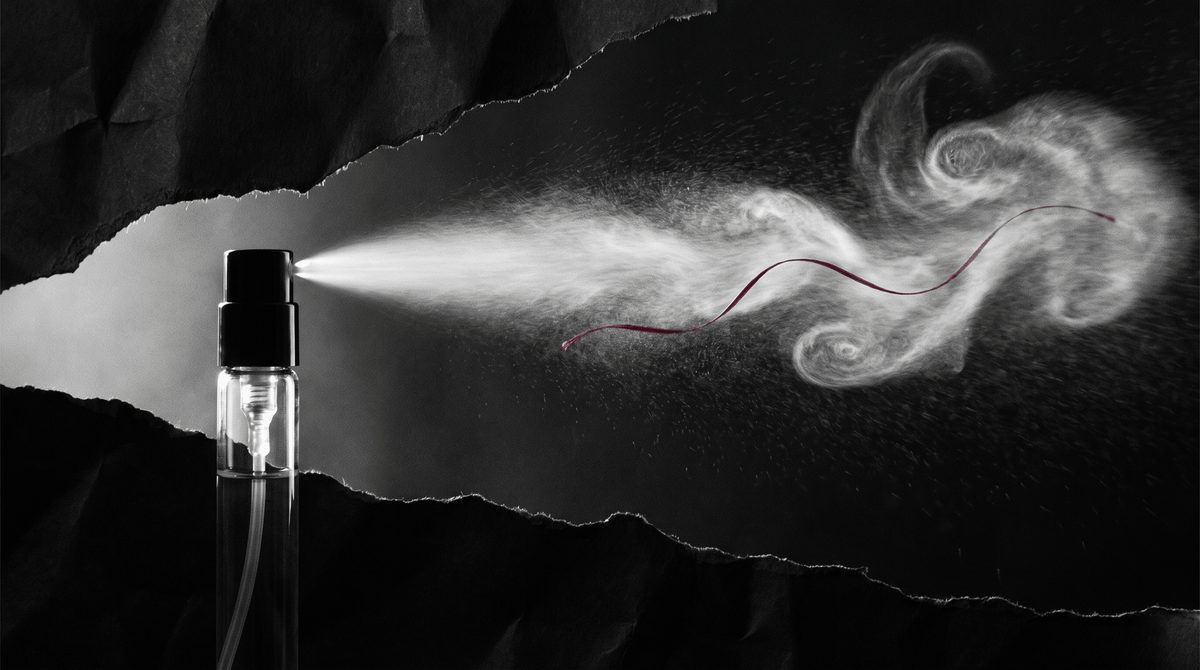
You catch it in passing.
Someone walks by in a hotel lobby, on a train platform, or through the doorway of a dinner party, and a fragrance hangs in the air a moment after they’ve gone. Not loud. Not harsh. Just present enough to make you turn your head and wonder what they’re wearing. That lingering trace is often what people mean when they talk about a perfume having “presence.”
If you’re here, you’re probably trying to answer a very practical question: what is sillage in perfume, and how do you tell whether a scent will whisper politely, float elegantly, or announce itself three steps ahead of you?
That question matters more than many beginners realize. A perfume can smell beautiful on a blotter and behave very differently on skin. It can seem soft at first, then bloom into a trail that follows you down a hallway. Another can smell rich up close yet stay almost private all day. The mystery isn’t random. It comes from concentration, materials, skin, weather, and how you apply it.
The good news is that sillage isn’t just something you discover by accident. You can learn to read it, shape it, and test it before you commit to a full bottle.
Table of Contents
- The Invisible Allure of a Perfect Scent Trail
- Sillage Explained The Art of the Scent Trail
- The Science Behind Sillage Factors Shaping Your Scent Trail
- How to Control and Master Your Sillage
- Choosing Your Sillage Perfume Strategies for Any Occasion
- Find Your Perfect Sillage Testing with Authentic Decants
The Invisible Allure of a Perfect Scent Trail
A memorable perfume rarely works like a spotlight. It works more like silk moving through air. You notice it, then it slips away, and that brief moment is exactly what makes it compelling.
In perfumery, some fragrances stay close to the body like a quiet conversation. Others leave a visible impression in the mind, almost like the path of a ship through water. You don’t need to see the wearer to know they’ve passed. That effect is one of the reasons certain perfumes become signatures. People don’t just smell them. They remember them.
That’s also where confusion starts. New fragrance lovers often use one word for everything. If a perfume lasts all day, they call it strong. If it fills a room, they call it long-lasting. If they can smell it on a scarf the next morning, they assume it must have great sillage. Sometimes that’s true. Often it isn’t.
A perfume can last a long time and still leave very little trail. Another can leave a beautiful trail early on, then disappear from the skin sooner than expected.
This matters when you’re choosing what to wear to work, on a date, for travel, or to a formal event. You don’t just want a scent that smells good. You want one that behaves the way you need it to.
Think of sillage as the social life of a fragrance. It’s the part other people experience as you move through space. Once you understand that, “beast mode” stops sounding mystical and starts sounding manageable. You can test for it. You can control it. And you can decide whether you want a cashmere whisper, an elegant aura, or a more dramatic trail.
Sillage Explained The Art of the Scent Trail
A wake in air, not water
Sillage comes from the French word for a ship’s wake. That image is the best place to start. A boat moves through water and leaves a trail behind it. A person moves through air and leaves a scent trail behind them.
That trail is not the same as how far a perfume radiates while you stand still, and it’s not the same as how many hours the scent remains on skin. Sillage is specifically about the fragrant trace that lingers as you pass by or just after you leave a space.
A useful example is a perfume that seems modest when someone is standing next to you, yet becomes striking when they walk down a corridor or pass on a staircase. That fragrance may have moderate projection but strong sillage. The movement matters.
One of the clearest technical summaries comes from Snif’s explanation of fragrance sillage, which notes that EDT typically contains 5 to 15% perfume oil and often gives a stronger initial push, while EDP at 15 to 20% tends to start more softly but leaves a better lingering trail. The same source also cites a 2018 study describing high-performing scents as maintaining a recognizable “face” of 7 or more diffusive ingredients, still detectable 3 feet away after 3 hours.
Sillage vs projection vs longevity
These three ideas overlap, which is why people mix them up. But they answer different questions.
| Term | What It Measures | Analogy |
|---|---|---|
| Sillage | The trail left behind as you move | A ship’s wake |
| Projection | How far the scent radiates around you while you’re standing still | A bubble around the body |
| Longevity | How long the fragrance remains detectable on skin | A candle’s burn time |
A simple way to remember it:
- Sillage asks, “What do I leave behind?”
- Projection asks, “How far out am I scented right now?”
- Longevity asks, “How long does this remain on me?”
Practical rule: If someone notices your perfume after you’ve just passed, that’s sillage. If they notice it while standing beside you, that’s projection. If you still smell it at bedtime, that’s longevity.
This is why a fragrance can be beautifully persistent on a scarf yet feel almost invisible in motion, or create a gorgeous trail for an hour and then settle into a skin scent. Once you separate these terms, perfume reviews become much easier to decode.
The Science Behind Sillage Factors Shaping Your Scent Trail

What the perfume itself contributes
Sillage starts inside the formula. Some materials lift quickly and vanish. Others move more slowly and leave a deeper imprint in the air.
Top notes such as bergamot often give you the bright first flash. Heart notes carry the perfume through its middle stage. Base notes like musk, amber, and resins are usually key architects of the trail because they unfold more slowly and hold their shape longer in motion.
The concentration also matters. In broad terms, lighter formats can feel brisk and sparkling at first, while richer concentrations often create a more sustained trail. That’s why many fragrance lovers notice a different character between an EDT and an EDP even when the name on the bottle is the same.
A practical mental model helps here:
- Citrus and airy notes create the opening handshake.
- Florals and spices shape the perfume’s body.
- Musks, amber, oud, and resins are often what people remember after you’ve gone.
What your skin and environment contribute
The bottle is only half the story. Your skin and surroundings finish the performance.
According to Buchart Colbert’s discussion of perfume sillage, higher body heat and humidity can increase evaporation rates by 2 to 4 times for every 10°C rise, which can amplify the trail of heavier base notes. The same source notes that oily skin can boost sillage by an estimated 30 to 50% compared with dry skin because lipophilic base notes cling better to sebum.
That helps explain a common frustration: the same perfume can feel almost explosive on one person and gentle on another.
A few real-world patterns show up again and again:
- Warm skin pushes fragrance outward. Neck and wrists often feel more alive than cooler areas.
- Humidity changes the shape of a scent. Heavy perfumes can bloom dramatically in hot weather.
- Dry skin can make a fragrance feel brief or sharp. The scent lifts off quickly instead of releasing slowly.
- Oily skin often holds onto richer notes better. The trail may feel smoother and more continuous.
If a fragrance disappointed you once, don’t assume the perfume is the problem. Test it again in different weather, on moisturized skin, or with fewer sprays.
This is also why “beast mode” should never be treated as a fixed trait. It’s partly a formula trait, but it’s also a skin-and-climate event.
How to Control and Master Your Sillage

You spray a perfume at home and it feels graceful. Two hours later in a meeting room, it fills the space like a loud voice in a quiet library. That is why sillage needs handling, not guessing.
The good news is that you can shape it with a few simple choices. Placement changes how far the scent lifts from your skin. Skin prep changes how evenly it releases. Spray count changes volume, but it is the last dial to touch, not the first.
Use placement as your first control
Sillage works like a wake behind a boat. Where you spray affects the size and shape of that wake.
Warm areas such as the neck and wrists usually throw scent outward more noticeably, while lower or covered areas keep it closer to the body. Moisturized skin often gives fragrance a steadier, slower release. Applied together, those two choices can make the same perfume feel polished and present, or soft and private, as noted in Harper’s Bazaar’s coverage of perfume sillage.
Use that as a simple control panel:
- Neck and wrists when you want the fragrance to speak a little louder
- Chest or clothing under a layer when you want a quieter aura
- Unscented moisturizer first when a perfume feels sharp, fleeting, or uneven
- One extra spray only after testing placement because more perfume does not always mean better diffusion
If you are testing a new fragrance, follow a step by step method for properly testing a perfume before deciding it is too weak or too strong.
Master sillage with decants first
This is the part many fragrance guides skip. The safest way to control sillage is to test it from a decant before you commit to a full bottle.
A decant lets you wear the fragrance in real life instead of judging it from one quick spray in a store. You can try one spray for a workday, two for dinner, or a moisturized application for an evening out. That teaches you more than any label that says "strong" or "beast mode."
"Beast mode" often sounds mysterious, but the idea is simple. Some perfumes project like a shout. Others stay close like a whisper. A decant helps you find out which one you are dealing with on your skin, in your weather, and in your routine.
Start small and keep notes:
- Close-wear test: one spray, lower on the body or under clothing
- Balanced test: two sprays on warmer skin
- Presence test: moisturized skin, then two or three well-placed sprays
- No blind overspraying: if it disappears to you, wait before adding more because your nose may have adjusted before the scent has faded
A short visual demo can make these choices easier to picture:
Strong sillage is not the goal by itself. The best trail fits the room, the distance between people, and the impression you want to leave.
Choosing Your Sillage Perfume Strategies for Any Occasion
A fragrance should fit the room the way clothing does. You wouldn’t wear black tie to the gym, and you probably shouldn’t wear room-filling oud to a cramped morning commute.
When quiet sillage is the better choice
Professional settings usually reward subtlety. So do medical spaces, air travel, shared cars, and close indoor dinners. In those moments, the best fragrance often behaves like good tailoring. It’s noticeable when someone is near you, but it doesn’t enter the room before you do.
That means aiming for a scent that stays near the body, using fewer sprays, and avoiding the temptation to reapply too soon. If you love niche perfumery, it helps to test niche fragrances in decants first because the same perfume that feels elegant at home can become far louder in a warm office or crowded train carriage.
When stronger sillage makes sense
There are moments when a more visible trail is exactly right. Outdoor events, evening parties, weddings, and cooler-weather social occasions can all support a perfume with a more noticeable aura.
In those settings, richer structures often shine. Woods, ambers, musks, and resinous compositions tend to leave a more distinct imprint than sheer citrus openings. Layering can also help. A matching body product under an EDP often creates a more polished trail than by spraying more perfume.
A good rule is to match your sillage to distance. The closer people will be to you, the softer your trail should usually be. The more open the space, the more room your perfume has to breathe.
Find Your Perfect Sillage Testing with Authentic Decants

Why blotters can’t tell the whole story
If you want the honest answer to what is sillage in perfume, you can’t stop at a paper strip. Blotters are useful for first impressions, but they don’t replicate body heat, skin oils, movement, fabric, or changing air.
Professional standards suggest that ideal sillage is often detectable at 2 to 3 feet, and one practical home method is to apply the fragrance, leave the room, and have someone enter a minute later to notice the lingering trail, according to Wikipedia’s overview of perfume sillage). That same reference also notes why testing with authentic decants matters. You need the authentic juice, especially with richer materials like oud and amber, if you want a true reading of the perfume’s trail.
That’s also why a beginner’s understanding of what a perfume decant is becomes so useful. A decant lets you test the perfume in motion, on your skin, on your schedule.
A simple decant-based sillage test
A small decant is one of the safest ways to answer the questions that matter before buying a full bottle.
Use this method over several wears:
-
Day one at home
Apply a modest amount and pay attention to the scent trail in hallways, doorways, and after you leave a room. -
Day two in your normal routine
Wear it to work, errands, or dinner. Notice whether the trail feels polished, shy, or too assertive. -
Day three in different weather or on moisturized skin
This tells you whether the perfume is stable or temperamental.
Ask someone you trust a very specific question: not “Do you like it?” but “How far away did you notice it, and when did it become softer?” That gives you useful feedback instead of vague praise.
“Test the perfume where you actually live your life. Sillage on your skin is the only version that matters.”
Decants also protect you from two expensive mistakes. First, they keep you from buying a full bottle of a fragrance that turns too loud or too quiet on your skin. Second, they let you compare styles side by side. You can wear a fresh EDT one day, a dense EDP the next, and learn your preferences through experience rather than marketing language.
That’s how fragrance confidence is built. Not by guessing from hype, but by testing perfume under real conditions until you know exactly how you want your scent trail to behave.
If you want to explore sillage without committing to a full bottle, Decant Sample offers authentic luxury fragrance decants in practical discovery sizes. It’s a smart way to compare concentrations, test skin chemistry, and find out whether a perfume gives you a soft aura, an elegant trail, or the dramatic presence you were hoping for.


