

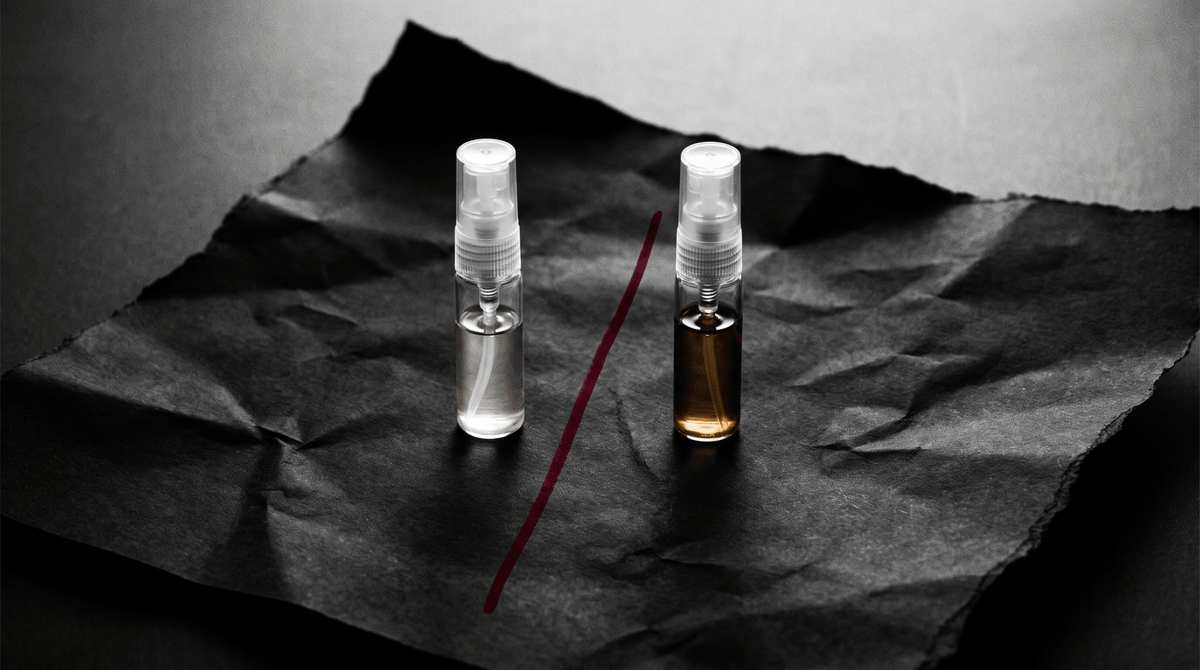
You're probably looking at two bottles with the same fragrance name and wondering why one says EDT and the other says EDP, and why the prices, descriptions, and reviews make them sound like different perfumes. That confusion is completely reasonable. Fragrance labels can look simple on the box and feel surprisingly slippery once you try to compare what they mean on skin.
A common understanding is that EDP is stronger, EDT is lighter. That's true, but it's not the whole truth. The more useful answer is that EDT and EDP can differ in concentration, behavior, mood, and sometimes even composition. In real wear, they may feel like close relatives rather than copies of each other.
If you've been asking what is the difference between EDT and EDP, the short answer is this: concentration starts the conversation, but experience finishes it.
Table of Contents
- Decoding the Labels on Your Favorite Fragrance
- The Core Difference Fragrance Oil Concentration
- How Concentration Shapes Your Scent Experience
- Beyond Concentration Why EDT and EDP Are Not Twins
- Choosing Your Concentration for Any Occasion
- The Art of Testing EDT vs EDP with Decants
- How to Store and Preserve Your Fragrances
Decoding the Labels on Your Favorite Fragrance
You are standing at a fragrance counter with a scent you already know by name. Then you spot two bottles. One says Eau de Toilette. The other says Eau de Parfum. Same family name, similar packaging, very different impressions once they hit skin.
Those letters are part of a classification system used in perfumery, and they give you an early clue about how a fragrance may wear. They point toward concentration, presence, and the kind of mood a brand is aiming for. If you want a broader map of those categories, this fragrance concentration guide gives helpful context.
The tricky part is that shoppers often read EDT and EDP as if they were simple volume settings, like low and high on the same speaker. Fragrance rarely behaves that neatly. With many releases, the EDT and EDP feel more like siblings than twins. They share a family resemblance, but one may spotlight citrus, herbs, or translucent florals while the other brings forward vanilla, woods, amber, or deeper petals.
That distinction matters because the label gives you the category, not the full story of the scent.
Perfumers can adjust more than strength when they build an EDT or EDP version. They may rebalance notes, soften sharp edges, add warmth, or change how quickly the fragrance moves from opening to drydown. On paper, the names match. On skin, the experience can shift in character, texture, and even personality.
This is why side by side testing matters so much. Smelling both from the cap is only a rough introduction. Wearing both, ideally from small decants on separate days or on opposite wrists, shows whether you are choosing a lighter version of one idea or two distinct interpretations of it. People who enjoy scent as part of a wider self-care ritual often appreciate that same personal, sensory approach found in holistic aromatherapy wisdom.
Your goal is not to find the “correct” label. Your goal is to find the version that feels right on your skin, in your routine, and in the moments you want the fragrance to accompany.
The Core Difference Fragrance Oil Concentration
The technical answer to what is the difference between EDT and EDP starts with fragrance oil concentration. That's the amount of aromatic material in the formula relative to the rest of the liquid.
A simple way to think about concentration
Consider tea. You can steep the same tea leaves lightly or more intensely. It's still recognizably the same idea, but the strength, depth, and texture in the cup change. Fragrance works in a similar way, except perfumery adds another twist because changing concentration can also change how the notes unfold.
EDT typically contains 5% to 15% fragrance oil, while EDP is commonly around 15% to 20% according to fragrance guidance from YSL Beauty and another fragrance explainer from Sairam (YSL fragrance concentration overview, EDP and EDT concentration ranges).

Core idea: concentration is the main technical distinction between EDT and EDP, and it influences intensity, texture, and wear.
If you enjoy broader scent rituals, some readers also like exploring holistic aromatherapy wisdom because it helps build a more intuitive understanding of how aromatic materials feel in daily life, even though perfume and aromatherapy serve different purposes.
For a wider look at fragrance categories beyond these two labels, this fragrance concentration guide is useful background reading.
Quick EDT vs EDP comparison
| Feature | EDT | EDP |
|---|---|---|
| Typical concentration | 5% to 15% | 15% to 20% |
| General impression | Lighter, fresher, more volatile | Richer, deeper, denser |
| Usual mood | Relaxed, daytime, easygoing | Polished, evening, enveloping |
| Best understood as | A lighter concentration category | A stronger concentration category |
One subtle but important point: concentration ranges can vary by brand and market. Some fragrance references use slightly different ranges, and there can be overlap across regions. So the label is helpful, but it isn't a perfect performance guarantee.
How Concentration Shapes Your Scent Experience
You spray an EDT on one wrist and an EDP on the other before leaving the house. At first, the EDT may feel brighter and more energetic, almost like a quick burst of cold sparkling water. A little later, the EDP often starts to feel fuller, softer, and more layered. That shift is where concentration becomes something you can feel, not just a number on a box.
Concentration affects three parts of the experience at once: how quickly a scent rises off the skin, how long it stays noticeable, and which parts of the formula get the most attention as the hours pass.
Longevity and evaporation
Perfume wears away in stages because the most volatile materials leave first. Citrus, herbs, and airy aromatics usually lift off quickly. Woods, resins, musks, and richer florals tend to stay closer for longer.
That helps explain why EDTs often feel lively in the opening. They can greet you with more sparkle and motion. EDPs usually move at a slower pace, with a denser feel that reveals itself over time.

Skin chemistry matters here too. Warm skin, dry skin, weather, fabric, and even how much you spray can change the result. So concentration gives you a tendency, not a promise.
Projection and drydown
Projection is the scent cloud around you. Drydown is the stage after the bright opening settles and the deeper character becomes clearer.
Many fragrance beginners get tripped up by the first few minutes. An EDT can seem stronger right away because it throws its top notes into the air faster. What you are noticing is lift. It is not always staying power.
An EDP often behaves more like a slower melody. It may start less sharply, yet feel richer in the middle and more persistent later on. If a formula gives extra space to woods, musks, amber, vanilla, or dense florals, the scent can feel more substantial even when it is not shouting.
A useful way to compare the wearing experience is to follow the arc rather than the first impression:
- EDT in the opening: often brighter, brisker, and more transparent
- EDP through the heart: often rounder, smoother, and more textured
- Late wear on skin: EDP often keeps more presence, while EDT may sit closer or fade sooner
A perfume is a timeline.
That is why side by side testing matters so much. If you only judge the opening, you may assume the EDT is the better fragrance because it catches your attention first. If you only judge late wear, you may prefer the EDP for its depth and persistence. Neither reaction is wrong. You are meeting different moments of the scent, and those moments can feel surprisingly different even before you get into the bigger question of whether the EDT and EDP are built as siblings rather than twins.
Beyond Concentration Why EDT and EDP Are Not Twins
This is the part many fragrance lovers learn only after a disappointing blind buy. They assume the EDP is a stronger EDT, then discover that it smells darker, sweeter, woodier, softer, or less sparkling than expected.
That surprise happens because EDT and EDP versions of the same fragrance are often better understood as related interpretations, not carbon copies.
Same name different emphasis
One fragrance source puts it neatly: EDT and EDP can be “siblings, not twins”, meaning they may not be the same exact blend at different doses (why EDT and EDP may be reformulated).
That phrase matters because it changes how you shop. If the two concentrations are siblings, then you aren't choosing between “weaker” and “stronger.” You're choosing between two artistic directions built from a shared identity.
A perfumer or brand might shape the pair like this:
- EDT version: more citrus, herbs, green notes, or airy sparkle
- EDP version: more woods, florals, resins, vanilla, or a smoother base
- Shared signature: the same DNA remains, but the balance shifts
This is why one person falls in love with the EDT of a fragrance and feels underwhelmed by the EDP, while another has the exact opposite reaction. They're not wrong. They're smelling different emphases.
Why this matters before you buy
If you love a scent because of its opening freshness, the EDT might be the truer version of what you enjoy. If you love the creamy, smoky, musky, or floral trail hours later, the EDP might be the one that captures your attention.
That's also why “EDP is better” is a bad rule. Better for what? Better for whom? Better in what weather, on what skin, for what mood?
Buying insight: the smarter comparison is not stronger versus weaker. It's brighter versus deeper, sharper versus smoother, casual versus dressed up.
This is also where decants become more than a budget tool. They become a way to smell the family resemblance and the artistic differences side by side.
Choosing Your Concentration for Any Occasion
You are getting dressed for two very different plans. One is a bright Saturday lunch on a warm patio. The other is a candlelit dinner that will stretch late into the evening. The same fragrance line might offer both an EDT and an EDP, but they may not play the same role on your skin.

A helpful way to choose is to match the scent's character to the setting. EDT often feels easier, lighter, or more sparkling. EDP often feels deeper, smoother, or more enveloping. Those are tendencies, not rules, and the same fragrance family can surprise you.
When EDT often makes more sense
EDT usually shines when you want your fragrance to feel like part of your presence, not the whole conversation.
It often suits:
- Daytime plans: commuting, coffee runs, brunch, errands, or a casual lunch
- Heat and humidity: fresher structures can feel more comfortable in warm air
- Close-quarter settings: offices, classrooms, shared rides, and anywhere scent etiquette matters
- People who love the opening: citrus, green notes, herbs, lavender, and airy florals often feel more vivid in EDT form
There is also a practical pleasure to EDT. You can refresh it later without feeling overdone, which some fragrance lovers enjoy as part of the ritual.
When EDP often feels right
EDP often earns its place when you want more atmosphere around you or more substance as the hours pass.
You may gravitate toward EDP for:
- Evening wear, especially dinners, events, and nights out
- Cool weather, when woods, resins, amber, vanilla, and richer florals can bloom beautifully
- Longer stretches of wear, if you do not want to think much about reapplying
- A fuller scent story, where the drydown matters as much as the opening
An EDP can feel like a velvet jacket. An EDT can feel like a crisp linen shirt. Neither is better. Each fits a different mood, temperature, and social setting.
That said, occasion alone will not choose for you. Some EDTs feel polished enough for formal wear. Some EDPs stay airy and transparent all day. Skin chemistry, climate, and even how heavily you spray can change the result.
The bigger lesson is personal. If you reach for a fragrance because its first fifteen minutes make you smile, the EDT may be your better companion. If you care most about the creamy woods, soft musk, or smoky trail that appears hours later, the EDP may feel more satisfying.
This is also why owning both can make sense. For some fragrance lines, EDT and EDP work like two outfits built from the same fabric. You recognize the family resemblance, but the mood is different.
If you want to compare those moods without committing to a full bottle, starting with small fragrance decants for side by side wear testing makes the choice much clearer.
The best concentration for any occasion is the one that fits the moment, matches your taste, and lets the version you love most show up clearly.
The Art of Testing EDT vs EDP with Decants
If EDT and EDP can smell different, there's only one reliable way to compare them. Wear them.

That matters because broad longevity ranges only tell part of the story. One fragrance guide notes that results vary by fragrance and context, which makes personal testing with discovery-size samples especially relevant for an accurate comparison (why scenario-specific testing matters).
A decant lets you move beyond hype, memory, and strip testing. If you're new to the format, this complete guide to perfume decants explains why they're so useful for real-world wear.
A simple side by side method
Don't test one concentration this week and the other two weeks later if you can help it. Memory is unreliable, especially with similar scent DNA.
Try this instead:
- Use one on each wrist. Put the EDT on one wrist and the EDP on the other.
- Keep the rest of your routine simple. Skip scented lotion or strongly fragranced body wash that day.
- Give them time. Don't decide in the first few minutes.
- Test in a real setting. Wear them during the kind of day you'd use them for.
The point isn't to crown a winner immediately. It's to notice what each version is trying to say.
What to pay attention to
As you wear both, observe a few specific things.
- Opening character: Which one feels more appealing in the first spray?
- Heart phase: After some time, which one feels more interesting, polished, or balanced?
- Base impression: Which one leaves the trail you want to smell on yourself?
- Comfort level: Does one become too dense, too faint, too sharp, or just right?
This short video gives a helpful visual primer before you test on skin:
You can also repeat the comparison on different days. Try one test in warm weather and another in cooler indoor conditions. Fragrance can behave very differently depending on environment, mood, and even what you're wearing.
Don't test for compliments first. Test for recognition. Which version feels like the scent you meant to buy?
That single question saves people from a lot of expensive mistakes.
How to Store and Preserve Your Fragrances
Once you've found the concentration you love, storage matters more than one might assume. Perfume isn't immortal. Heat, light, and humidity can all push a fragrance away from the way it was meant to smell.
What damages fragrance fastest
The usual problem isn't using perfume too slowly. It's storing it badly.
Try to avoid:
- Direct sunlight: windowsills look beautiful, but light exposure isn't your friend
- High heat: warm rooms and cars can stress a formula
- Bathroom humidity: repeated steam and temperature shifts aren't ideal
- Loose caps or poor sealing: extra air exposure can dull a fragrance over time
If a scent starts smelling flatter, sharper, or slightly off compared with how it used to smell, storage may be part of the reason.
Better habits for bottles and decants
A cool, dark drawer or cupboard is usually a safer home than an open shelf in a bright room. Original boxes can help too, especially for bottles you don't use every day.
For travel sprays and samples, a protective case helps with both storage and portability. If you're comparing or carrying small atomizers regularly, this guide to the best perfume atomiser is a practical place to start.
A few habits go a long way:
- Keep fragrances upright so the liquid stays where it should.
- Close them properly after each use.
- Store backups away from light rather than displaying everything at once.
- Treat decants with the same care you'd give a full bottle.
A beautiful fragrance can stay beautiful longer if you protect it from the environment.
If you want to compare EDT and EDP the smart way, Decant Sample makes that process far easier. You can explore authentic luxury fragrance decants in practical sizes, test concentrations side by side on your own skin, and discover whether your favorite scent is better for you as an airy EDT, a richer EDP, or both.


